Contents
- What previs means in film and animation
- Storyboards, animatics and previs side by side
- Where previs is used in live action and animation
- How storyboard artists and previs artists work together
- Why film language comes before the software
- Previs as a career path and how storyboard skills carry over
- Frequently asked questions about previs
Before a big action scene is filmed, or before the animators start on an animated one, the director often watches a rough moving version of it first. That rough version is called previs, short for previsualization and also written previz. It lets a whole crew see where the cameras go, how the characters move and how long each moment lasts, before anyone commits to the real thing.
I have worked in film, TV and games for more than 25 years. In that time I have storyboarded six feature films across live action and animation, worked as a storyboard artist at Pixar and directed episodes of Star Wars Rebels and Star Wars Resistance at Lucasfilm. Storyboards, the panels that plan a film moment by moment, usually come before previs. So I see previs from the story side of the table, and that is the view I share in this guide.
I explain what previs is, how it compares with storyboards and where film and animation use it. Then I cover how story artists and previs artists work together and why telling a story with the camera matters more than the software. I finish with previs as a career and how storyboard skills carry over into it.
What previs means in film and animation
Previsualization simply means seeing the film before it exists, and previs is its short form. In practice it is a rough 3D or animated version of a sequence, made before the shoot or the final animation. A sequence is a run of shots that tells one part of the story, such as a chase, and a shot is one unbroken piece of film between two cuts.
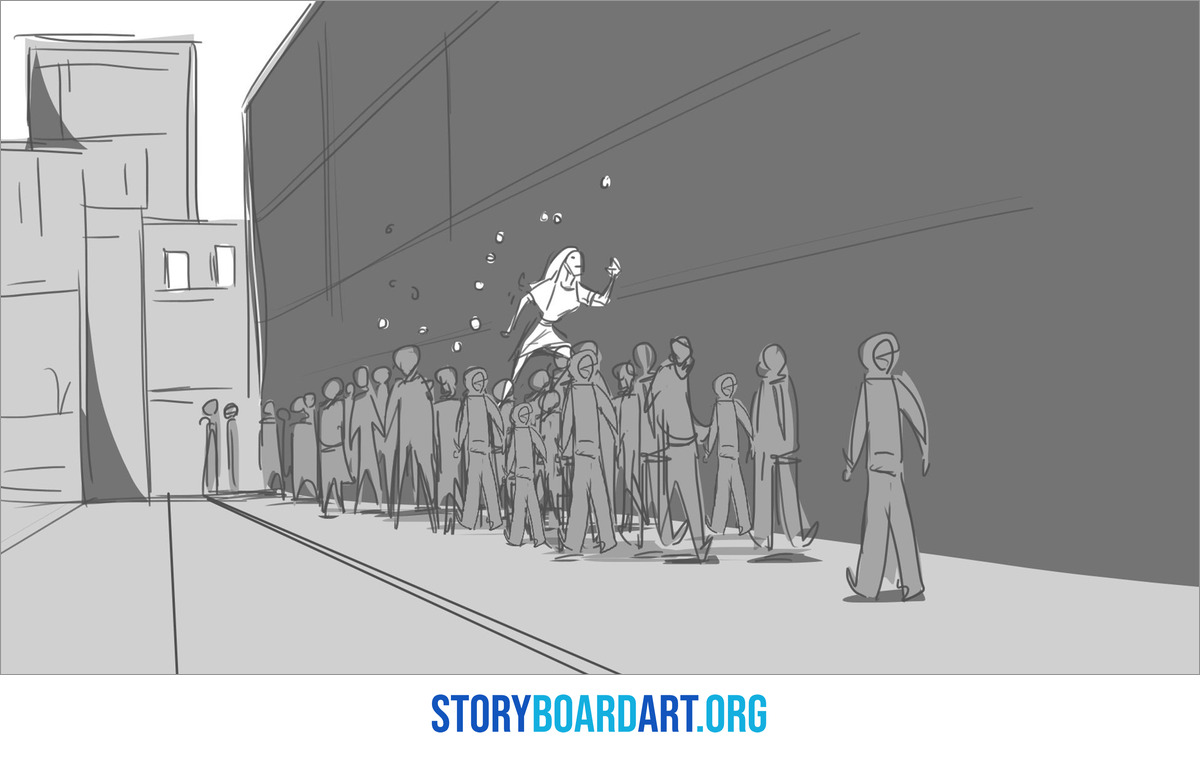
Previs plans three things for that sequence: the cameras, the staging and the timing. Staging is where the characters stand and move in the frame, and timing is how long each action and each shot lasts on screen. Both are hard to judge from a script and expensive to change once a crew is on set or animators have started work.
The models in previs are kept simple on purpose. Characters are often plain figures with no detail and the sets are basic blocks, because nobody needs finished lighting or texture to judge a camera angle. What matters is that the camera moves through the space the way the final camera will.
When the previs is done, the director can watch the sequence like a very rough version of the finished film, often with temporary music and sound effects. If a shot does not work, the team moves the camera or changes the action and watches it again. Previs is cheap to change, so the hard choices get made while they are still easy to undo.
Storyboards, animatics and previs side by side
Storyboards, animatics and previs all plan the same film, but each one answers a different question. I think of them as three passes over the same sequence, each one closer to the finished film than the last.

A storyboard is the sequence drawn as a series of panels, a little like a comic, with one or more panels for each shot. It answers what the audience sees and in what order: which shots the scene needs, what sits in each frame and where the important moments land. Because drawings are fast, a story artist can try many versions of a scene before anyone builds anything.
An animatic is the storyboard cut together in time, with dialogue, music or temporary sound, so each panel stays on screen for as long as its moment should last. It answers how long the sequence runs and whether the rhythm works, which a page of panels cannot tell you. If you want to see one built panel by panel, What Is an Animatic? How Storyboards Become a Timed Scene walks through the process.
Previs takes the same sequence into 3D space, with a virtual camera that behaves like a real one and characters at their real size. It answers whether the shots actually work: whether the camera fits in the room, whether a move feels right at speed and whether one shot cuts smoothly into the next.
Boards usually come first because drawing is the fastest way to find the story in a sequence. A 3D scene takes far longer to set up than a sketch, so it pays to know which shots you want before the building starts. Previs can start without boards, but then the 3D artists are making story choices and camera choices at the same time, which is slower and harder to get right.
Where previs is used in live action and animation
In live action, meaning films shot with real actors and real cameras, previs is most common on the scenes that are hardest and most expensive to shoot. These are usually action scenes, stunts and shots with heavy visual effects, the parts of a shot that are added or built on a computer later.
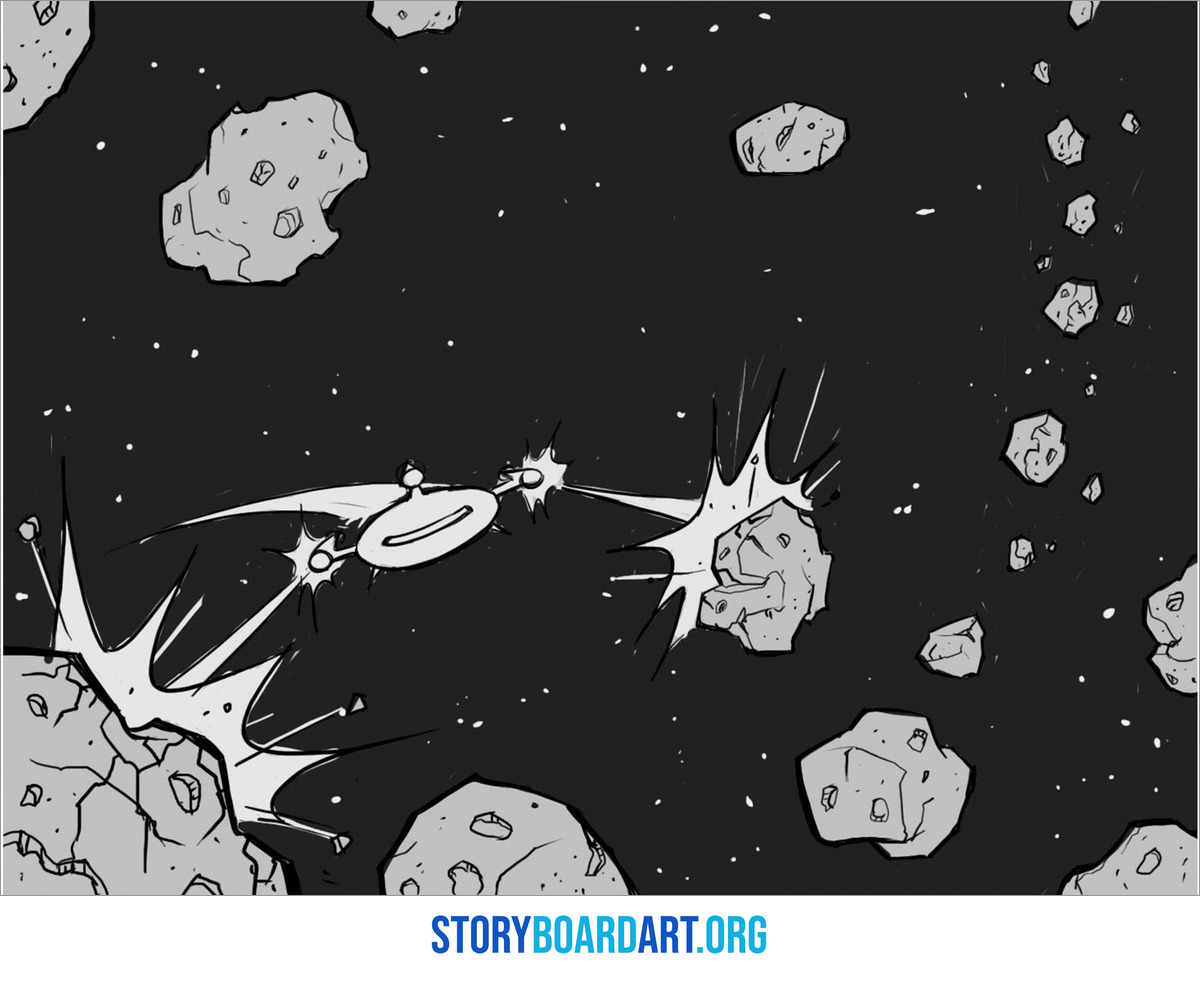
- Action scenes and stunts: previs lets the director, the stunt team and the camera crew agree on every move of a fight or a chase before anyone steps onto the set. Each move can be checked through the camera, so the team knows exactly which parts of a stunt the audience will see. How to Storyboard Action Scenes: Fights, Chases and Pacing covers how to board these sequences so they read clearly.
- Visual effects: when a creature, a crowd or a whole city will be added later, previs shows the director and the crew where that missing piece sits in the frame. It also gives the effects artists a plan for each shot long before the footage reaches them.
- Techvis: short for technical previs, it turns the chosen shots into real measurements, such as where the camera stands, which lens it uses and how fast it moves. It gives the camera and stunt teams real distances to plan from, instead of guesses.
- Postvis: short for postvisualization, it happens after the shoot, during the edit, when rough effects are placed over the filmed footage. The director and the editor can then cut the sequence with a stand-in for every effect while the finished shots are still being made.
In animation, the closest thing to previs is called layout. Walt Disney Animation Studios describes layout on its own page as the step where artists, working from the storyboards, stage and shoot the film shot by shot. The page says layout builds the first 3D version of the storyboards and makes the important choices about the camera and how each shot is framed.
According to the same page, layout artists also animate the characters roughly at this stage, and they sometimes break away from the boards with ideas of their own. Animation Storyboard: How Storyboarding for Animation Works goes deeper into the boards that animation layout starts from.
How storyboard artists and previs artists work together
On a production with a previs team, the storyboards are usually the brief the previs artists build from. The story artist hands over the boards, often cut together as an animatic, and the previs artists turn the panels into shots in 3D.
That handoff works best as a conversation, not a delivery. When the 3D camera shows that a drawn angle cannot work in the real space, the story artist redraws it and the previs is built again. The same happens when a move takes longer on screen than the panels suggested.
A drawing can cheat the space in ways a 3D camera cannot, and that is exactly why the two jobs need each other. The board finds the strongest way to tell the moment, and the previs proves it can be shot.
On a live action film, the previs then travels to the set, where the director and the crew use it to plan each shot. But a shot choice does not need previs to reach the set, and sometimes the boards carry it there on their own.
When I worked on the independent feature Little Boy back in 2013, the film was about a young boy who was shorter than most of his classmates. It was a period piece, a drama, where the child was longing for a relationship with his dad. There were many scenes where we built the emotional connection with his father, who was away fighting in the war and then returned home.
Not everything I boarded ended up in the film as I had staged it, but in the boards there were a number of shot choices that affected how we shot the scene. I remember one in particular where the mother breaks down crying when she is given the news that her husband could be dead, or had been taken prisoner of war. It was a wide shot where she openly breaks down on her knees and starts crying.
I was invited to the set and I saw that scene play out. It was emotionally impactful for everyone on the set, watching Emily Watson do a piece of brilliant acting. The camera was wide, but it captured the emotion quite well.
That is one of the wonderful pleasures of seeing the idea on paper, pitching a particular shot choice, and then witnessing how it actually came to fruition. In the end everything we do in dramatic visual storytelling is hinged on human emotion. We have to capture it in the most effective way possible so we build a rich visual experience for the audience.
Whether a shot choice reaches the set through the boards or through previs, it has to serve the emotion first. That is why I draw boards a crew can actually shoot from, with clear framing and staging in every panel. Storyboard Format for Film: Boards a Crew Can Shoot From shows how to lay out boards like that.
Why film language comes before the software
In 3D, a camera can go anywhere, at any height and at any speed. That freedom is also the trap, because a camera that can go anywhere still needs a reason to be in one place rather than another.
That reason comes from film language, the shared set of choices filmmakers use to tell a story in pictures. Three parts of it decide whether previs works: staging, camera choices and continuity. Continuity means keeping where characters stand, look and move consistent from one shot to the next, so the audience always knows where everyone is.
When every shot sits at the same distance and height, previs looks flat, however polished the models are. Different Camera Shots in Film: Fix Flat Storyboards shows how wide shots, close-ups and changes of angle keep a sequence alive, on paper or in 3D.
I learned how much this matters at Lucasfilm Animation.
I was working at Lucasfilm at the time and the department was experimenting with previs and 3D storyboards. They asked the traditional storyboard artists on the story team to help train the 3D artists in doing story. I just assumed they would pick it up, just like we had all done it.
What I realised was that it was actually much more difficult for somebody who had not learned the visual language, the film language, the staging skills you need for visual problem-solving with characters in a scene. There is a certain method you need, and you need to be trained in a certain way to do it.
That experience is why I started StoryboardArt: storyboarding is a learned method, not a talent you either have or do not. The tools keep changing, but the method underneath them stays the same. Storyboard Software: The Tools Story Artists Use covers the tools themselves, and each one works better in the hands of an artist who knows the method.
Previs as a career path and how storyboard skills carry over
Previs is a career of its own, done by previs artists on live action films and by layout artists in animation. The job asks for two things at once: speed in a 3D tool and a good eye for film language.
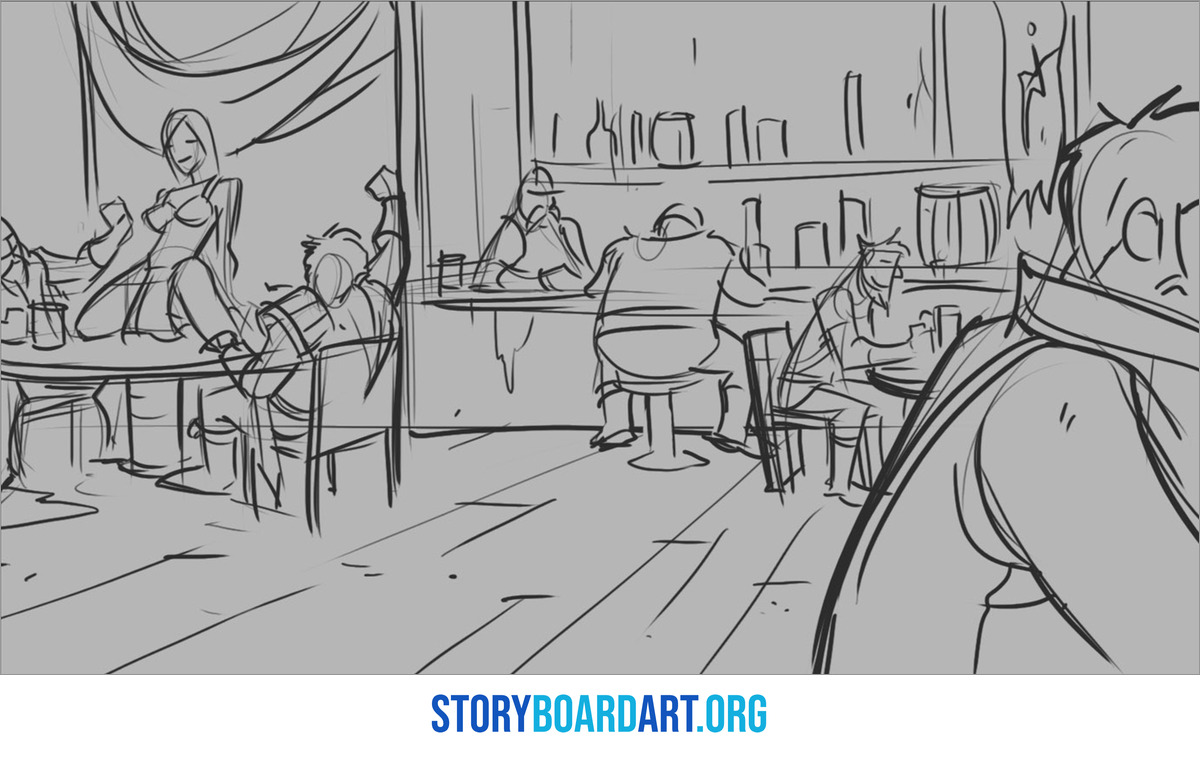
In my experience the 3D tool is the easier half to learn, and the film language is the half that takes real training. That second half is the one a storyboard artist already uses on every board:
- Staging: knowing where to put the characters so the audience reads the moment at a glance works the same way in 3D as it does on paper.
- Camera choices: choosing the distance, the angle and the move for each moment is the core of both jobs, whether you draw the frame or set up a virtual camera.
- Continuity: a story artist learns to keep screen direction, the way characters face and move across the frame, consistent from cut to cut, and previs needs the same care.
- Timing: anyone who has cut an animatic already knows how long a moment can hold before it drags, and previs runs on the same sense of rhythm.
If you are weighing previs against story work, What Does a Story Artist Do? (And How to Become One) explains the story side of that choice.
Whichever path you choose, start with the film language, because it is the part no tool can do for you. Board a short sequence, cut it together as an animatic and check that every camera choice has a reason behind it. That habit will serve you in previs, in layout and on a story team alike.
If you want help turning sequences like that into a strong portfolio, start with Free Training: Build a Killer Storyboard Portfolio, where I walk you through how to build one.
Frequently asked questions about previs
Is previs the same as an animatic?
An animatic is the storyboard cut together in time with dialogue and sound, so the shots are still flat drawings. Previs rebuilds those shots in rough 3D, with a virtual camera that moves through the space the way a real one would. On many productions the animatic comes first and guides the previs team.
Does every film use previs, or only big ones?
On a live action film, previs takes time and a team of its own, so productions often save it for the scenes that are hardest to film, such as stunts, big visual effects and complex camera moves. Quieter scenes are usually planned with storyboards alone, and many smaller films skip previs entirely.
How is pitchvis different from previs?
Pitchvis is previs made to sell an idea rather than to plan a shoot. It is a short, rough sequence that shows a studio what a film or a scene could look like before it gets the green light, while regular previs plans how to film scenes that are already approved.
Do you need 3D skills to work in previs?
Previs artists build their shots in 3D, so learning a 3D tool is part of the job. What makes those shots worth building is film language, the sense of where the camera goes and why. Storyboard artists practice that skill on every board.
