Chances are you have never heard the name Darryl Henley before landing here. He is a working storyboard artist with credits on major studio films. You typed "darryl henley storyboard artist" into a search bar because you wanted samples of his work, or maybe some inspiration for how a professional thinks through a shot.
Instead you got database pages. A credit here, a title there. No images. No bio. Nothing to actually learn from.
That wastes your time. So here is the rule for this piece: stick to what can be sourced and shown, not guesses about who this person is as a working artist.
By the end, you will have a clear method for turning a thin credit list into a real study kit. That method works on Henley, and it works on any other working storyboard artist you research the same way. Look at the material the way a story supervisor would. A story supervisor reviews a sequence and decides if it is ready to move forward. That is the lens to use on any reference artist, including your own work.
Who is Darryl Henley ?
Darryl Henley is a storyboard artist credited on major studio and feature productions in public film databases. He is also co-credited with Sam Hudecki on the published book "Blade Runner 2049: The Storyboards," released by Titan Books in 2021. Public records list many credits but little else about him.
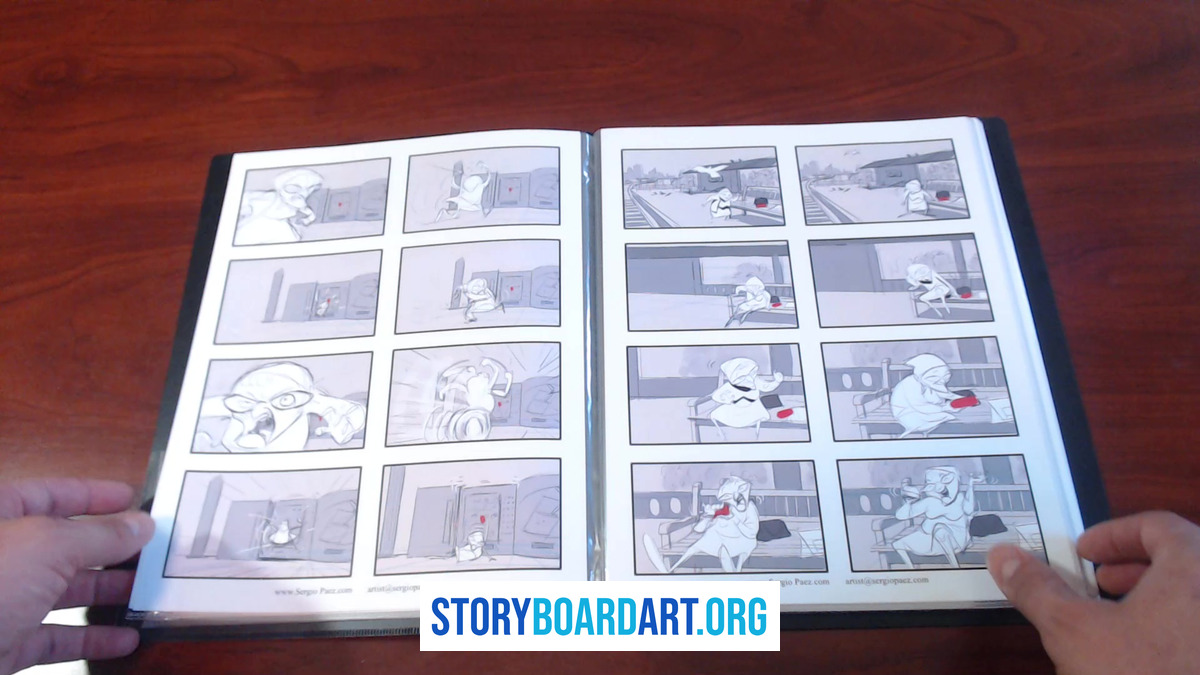
That gap matters for what follows. A storyboard artist draws a movie's scenes as a series of pictures before filming starts, almost like a comic strip. These drawings help directors plan camera angles and shots. This article is not an official biography of Henley. Think of it instead as a research guide, built only from public material that can be checked: film credits, one published book, and records that trace back to a real source.
Set your expectations now. You might be hoping to find a personal portfolio website or an artist statement from Henley himself. You will probably not find one. Build your study plan around his film credits and the published book instead, since a personal gallery does not appear to exist.
Here is what you can safely take from the databases. Darryl Henley shows up as a storyboard artist on several major movies, listed across more than one film database. Blade Runner 2049 has the strongest public proof, since Titan Books published a book showing storyboard art from the film. His credits stretch across many years, not just one project. That pattern matters. One credit could be a lucky break, or a short job filling in for someone else. Credits spread across many years, on real studio movies, point to someone who worked steadily in the industry.
Now here is what you cannot responsibly guess. A credit does not tell you which exact scenes he drew. It does not tell you if he led a team of artists or was one artist among many. It does not tell you how he worked with the director, or whose ideas ended up on the page. Unless a real source says these things, like an interview or a credited book, treat them as unknown. Guessing at these details is the trap this whole search leads people into.
How to research a storyboard artist when the internet only gives you credits
Here is a method you can reuse on any working storyboard artist, not just Henley.
Step 1: Treat credits as leads, not proof. A database entry tells you a name got attached to a production. It does not tell you what that person actually drew, how much of the film they boarded, or whether the credit is even recorded correctly. Start there. Do not stop there.
Step 2: Cross-check at least two databases. IMDb is not the only record. Check studio press materials, union records if you can find them, and a second film database. If one source lists a credit the other does not, write it down. A disagreement between two sources is a clue, not a dead end.
Step 3: Find outputs that might actually show storyboard drawings. Most credits never show you a single image. A few formats sometimes do: published storyboard books, behind-the-scenes art books, "making of" documentaries, museum exhibits of film art, auction catalogs, and studio press kits. For Henley, that narrows things fast. The one credit that actually leads somewhere is his co-credit with Sam Hudecki on "Blade Runner 2049: The Storyboards," a book published by Titan Books.
Step 4: Verify the credit itself. Do not trust a caption on a fan blog or a reposted image with a name slapped on it. Look for the real publisher credit, the title page of a book, or the on-screen credit roll from the film. A published book with a named co-author on the cover is about as solid as this kind of proof gets.
Step 5: Separate what the artist did from what you can legally look at. Someone drawing a scene does not give you the right to view a leaked scan of it. Studio boards are usually unreleased, copyrighted production material. Build your study list from legitimately published sources, not stolen frames passed around on forums.
Run this loop on Henley and you get a short, honest list instead of a pile of guesses. Cap your study list at three sources: the "Blade Runner 2049: The Storyboards" book, any verified interview or press feature tied to a specific film credit, and one cross-checked database entry you actually trust. Cap your skill list at three as well: staging a shot to hit a specific visual tone, keeping continuity across a sequence so the space and direction of movement stay consistent from one panel to the next, and turning a director's intent into a clear drawing on a deadline.
That is the whole method. Credits open the door. Verified, published work is the only thing worth studying once you are through it.
What a storyboard credit actually means, and where to find images that prove it
Before you study any credit list, fix the wrong idea. Storyboard artists do not make pretty pictures. Boards are a planning tool that solves problems before a film crew spends real money solving them on set. A board answers questions like these. Where does the camera sit? Which way does the character face, so the shot cuts together cleanly with the next one? What does this shot need to tell the audience before the story moves on?
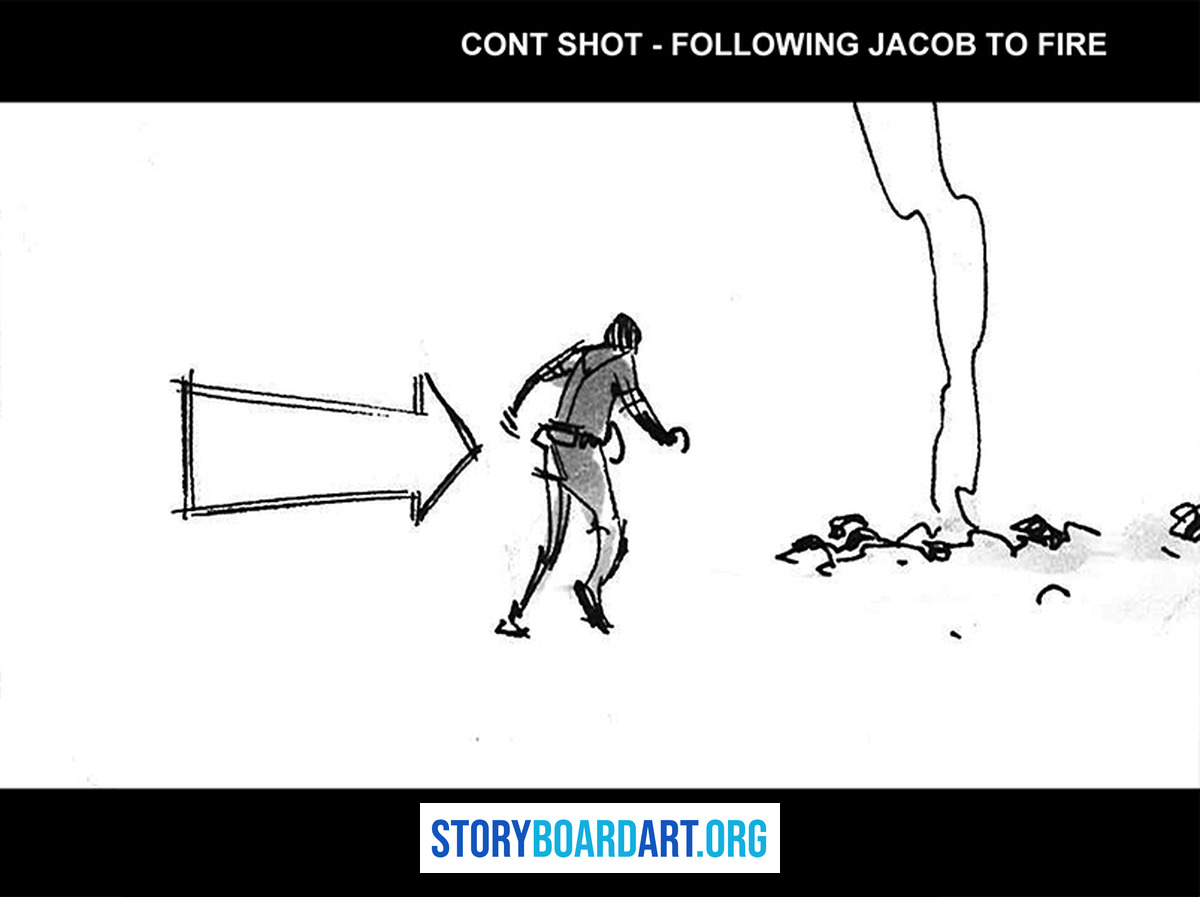
Two words explain most of that planning work. Continuity means the story stays consistent from shot to shot, so nothing jumps or contradicts itself. Screen direction means keeping left and right consistent, so the audience never gets confused about which way someone is moving.
Boards also get thrown out constantly. A director changes a scene, and the boards for it get redrawn, sometimes by a different artist than the one who drew them first. A single sequence in a finished film can pass through several hands before it is done. That is why "who drew this exact panel" is often impossible to answer, even with a perfect credit list. The job was never about one artist owning one drawing. It was always about the sequence working.
You will also see other job titles near storyboard artists in databases and books. A storyboard artist draws the shot-by-shot sequences. A production illustrator does related work, but usually focused on concept art or key single images rather than full sequences. Art department is a catch-all credit category, not a specific job. It lumps many different roles together, so seeing it tells you almost nothing about what someone actually did.
That is also why databases will not agree with each other. One site lists a credit the other does not. One calls a job "storyboard artist." Another calls that same job "art department." Neither site is lying on purpose. They just pull data from different places, and nobody double-checks all of it. You cannot treat any single database as the final word. Use a ranking system instead, from strongest to weakest. Strongest: credits printed inside a published book, credits that roll on screen in the actual film, official pages from the studio or publisher. Useful but not sufficient on their own: IMDb and TMDb are large public film databases anyone can help edit, good for finding leads, not proof by themselves. Weakest: scraped lists on random blogs and forums that copy credit dumps without checking them.
When you cannot verify something, do not publish it as fact. Keep it as a private note labeled "unverified." That one word stops you from turning a rumor into research. Draw two columns on a page. Label one "Verified sources I can cite." Label the other "Interesting leads." A fact only earns a place in your portfolio study once it has moved into column one.
The strongest lead you have for Henley is the book already named above. "Blade Runner 2049: The Storyboards" is credited to Sam Hudecki and Darryl Henley, published by Titan Books. That is a real, checkable source, not a rumor or a forum repost. It has a publisher, a cover, and two names printed on it. If you want to study Henley's work honestly, this book is your best starting point, and possibly your only solid one. Here is what a published storyboard book usually gives you. You get the sequencing, meaning the order the shots run in. You get the shot choices themselves: wide, medium, or close. Sometimes you get commentary explaining why a scene was drawn a certain way. That is enough to study clarity, pacing, and staging, even without a single interview.
Beyond that one book, look in categories rather than chasing guaranteed hits. Art of books made for specific films sometimes include boards. Exhibition catalogs from museum or gallery shows occasionally do too. Making-of documentaries and press coverage tied to a release sometimes show a board on screen for a few seconds. Studio FYC materials can also help. FYC stands for "for your consideration," the packets studios send out during award season, and they sometimes include behind-the-scenes art. None of these are guaranteed to have Henley's work in them. Check before you assume.
Build a study kit and stop there. Pick one primary source, a book you can actually access, like the Blade Runner 2049 storyboards. Add two secondary sources: the finished film itself, and one interview or making-of feature if you can find one. Three sources total. Then study, instead of collecting more links.
How to study professional storyboards and turn that into portfolio skill
Finding good boards to study is step one. Studying them the right way is step two, and that second step is the one that actually makes your own work better.
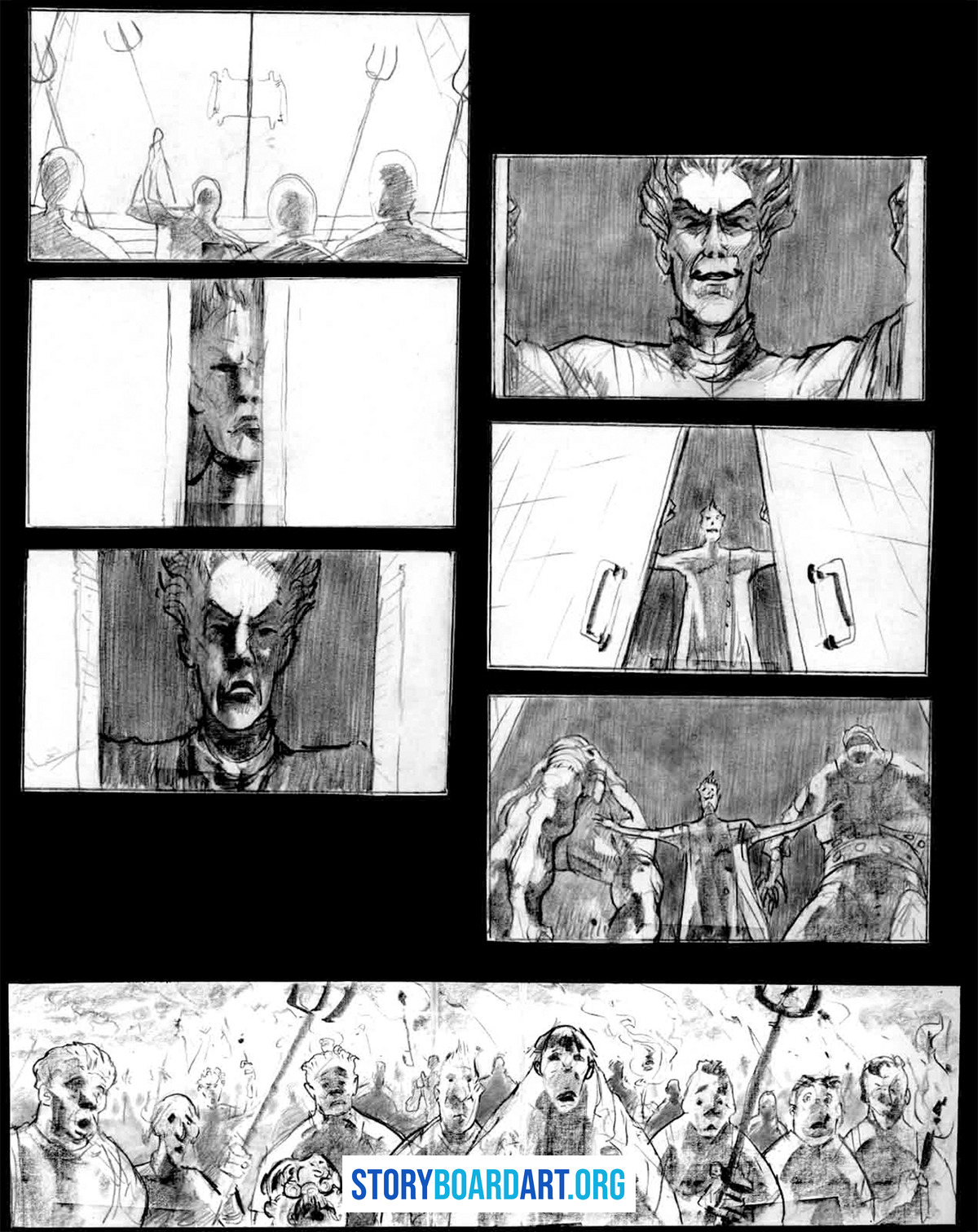
Run three passes over every sequence you study, always in this order.
Pass 1: clarity. Cover every caption and word balloon so you cannot read them. For each panel, write one sentence describing what is happening in it. If you cannot write that sentence without guessing, the panel failed. Not you.
Pass 2: geography and continuity. Continuity means the space and the direction characters move in stay consistent from one panel to the next. Draw a simple top-down map of the room or location, like a floor plan. Mark where each character enters and exits on your map. If your map contradicts itself, that means the sequence breaks continuity, and now you know what a break actually looks like.
Pass 3: shot progression. Label every panel W, M, or C for wide, medium, or close. A wide shot shows the whole space, a medium shot shows a character from about the waist up, and a close shot fills the frame with a face or object. Circle any run of four or more identical letters in a row. For each change in letter, ask why the camera moved closer or wider at that exact moment. If you cannot answer in one sentence, that shot choice was probably a habit, not a decision.
Run all three passes on the Blade Runner 2049 storyboard book. Then run them again on your own most recent sequence. Here is the actual point of doing this drill. You are not copying Henley's style, or anyone else's. Style is the part that does not transfer to your work. What does transfer is the decision-making underneath the style: why this panel is a close-up, why the camera holds still here and cuts there. Steal that decision-making, panel by panel, and you walk away with something a studio can actually use.
Frequently asked questions
Is there an official Darryl Henley portfolio site I can study?
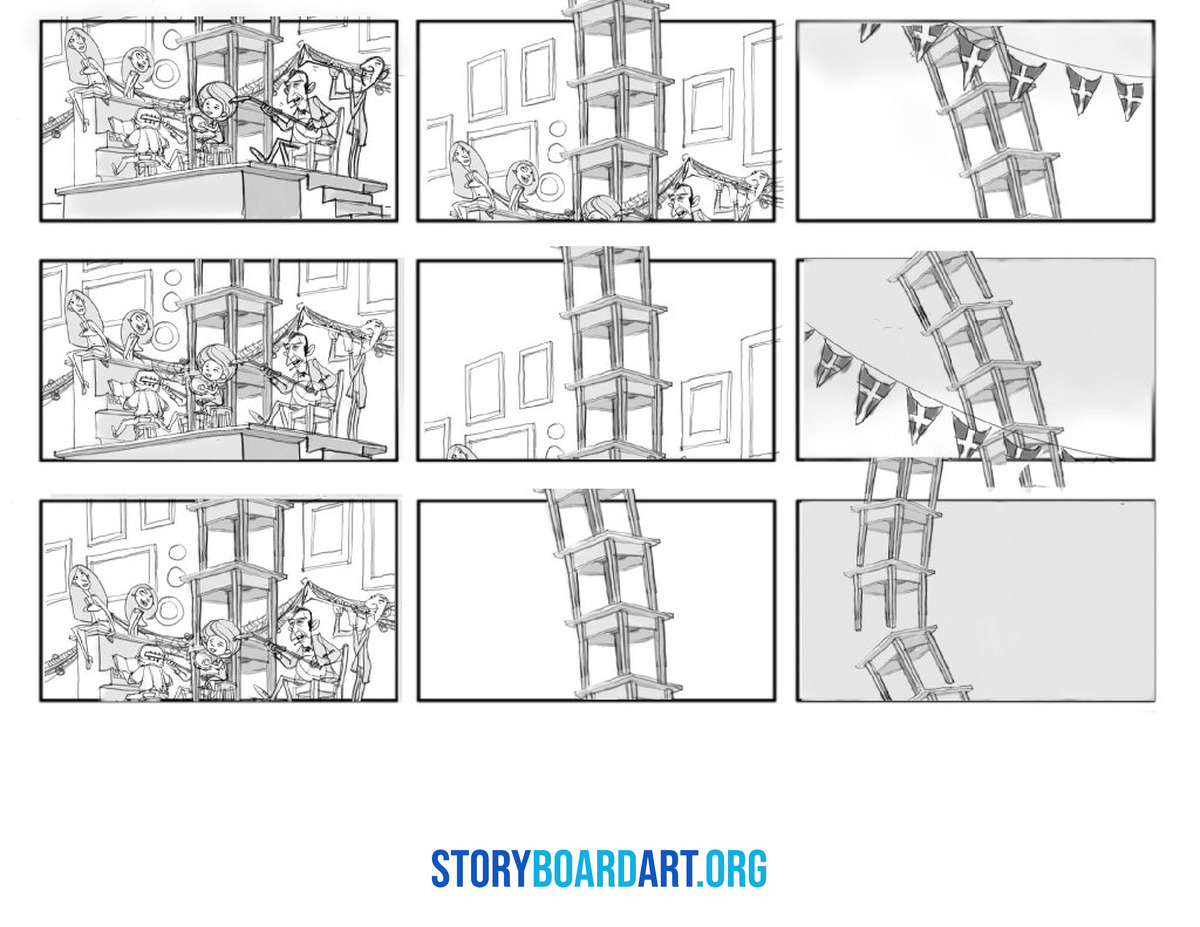
Not that public records show. Big film databases almost never link out to a personal site for artists working below the top studio credits, and that holds true here. Use the "Blade Runner 2049: The Storyboards" book instead. A publisher-credited book is a stronger study anchor than a personal site anyway, since you know exactly whose work you are looking at.
Why do IMDb and other databases list different numbers of credits?
Because each database pulls its data differently, sorts jobs into different categories, and updates on its own schedule. None of them is complete on its own. Treat every database listing as a lead worth checking, not a finished fact. If you plan to cite a credit anywhere, verify it against a book, a film's on-screen credits, or a studio page first.
What is the difference between storyboard artist and production illustrator?
A storyboard artist draws a full sequence of shots to plan how a scene will be filmed. A production illustrator usually paints single key images that sell a mood, a design idea, or a big moment, without carrying the shot-by-shot planning job. The two roles can blur on a real production, and one artist sometimes does both. But when you are studying credits, do not assume they mean the same thing.
Can I put frames from a published storyboard book in my portfolio?
No. Do not present someone else's published panels as your own work under any circumstance. If you want to study a book like the Blade Runner 2049 storyboards, redraw a sequence in your own hand and label it clearly as a study, not original work. What actually helps you get hired is showing your own re-interpretation of the storytelling problem, not a copy of someone else's panel.
I want a studio-ready storyboard portfolio, what should I build next?
Sequences, not single pretty panels. A portfolio that gets callbacks holds three to five full sequences, each with a beginning, a turn, and an end, built and rebuilt against honest feedback. For the full walkthrough on what to build and how to structure it, go to storyboardart.org/killer-storyboard-portfolio.
