Contents
- What is a Dutch angle? The definition storyboard artists use
- How a Dutch angle works: what you are actually tilting
- Why is it called a Dutch angle? The Deutsch mix-up
- What a Dutch angle communicates to the audience
- How much to tilt: a practical range that reads on purpose
- How to compose a Dutch angle so it stays readable in boards
- Dutch angle in movies: patterns worth stealing and one to avoid
- Dutch angle example: one beat, three versions, and what changes
- The real risks: when Dutch angles hurt your scene
- Frequently asked questions
You use a Dutch angle because the scene feels wrong. Then comes the question: why? Without a clear answer, the tilt looks accidental. That's the danger.
A Dutch angle makes the horizon slant. Used randomly, it reads like a mistake. Used intentionally, it telegraphs unease directly to the director's eye.
By the end, you'll know how much tilt works, when to hold it steady, and how to keep sequences from looking like a ship in rough seas.
What is a Dutch angle? The definition storyboard artists use
A Dutch angle tips the camera sideways so the horizon isn't level. The frame feels unstable for a reason, and the slant must serve the story.
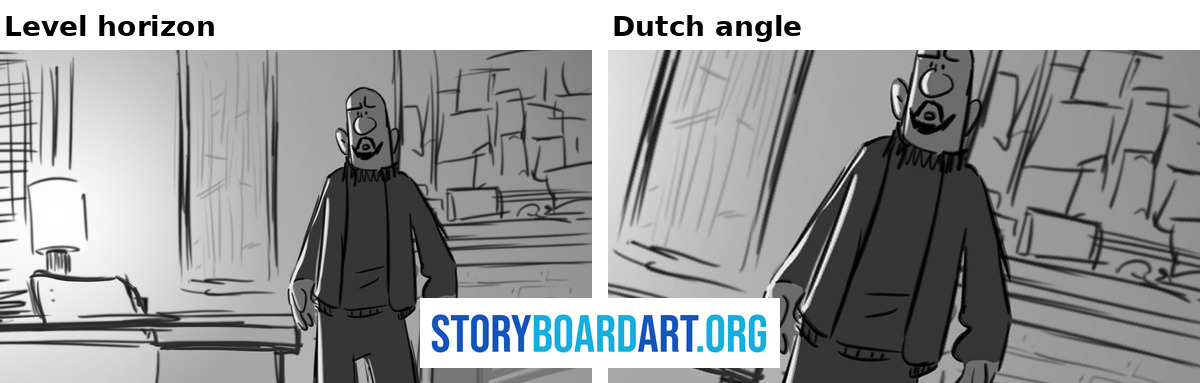
Call it what you want: Dutch tilt, canted angle, oblique angle. They all mean the same thing. Spot one by checking lines that should be straight: horizons, doorframes, walls. If they're leaning, you've got a Dutch angle.
This tilt comes from camera roll, not from panning or pointing the lens up and down. The camera spins on its axis like a steering wheel. You can shoot up at skyscrapers or down from balconies and still keep a flat horizon. The Dutch angle adds that extra twist on top of any other framing choice, and that twist is what unsettles the viewer.
How a Dutch angle works: what you are actually tilting
Normal shot: horizon flat, walls plumb, everything feels steady. That stability is your baseline, and breaking it is what makes the Dutch angle work.
This is about rolling the frame, not panning across a room or tilting up and down a wall. The whole image tips. Horizons become diagonals. Characters lean. Doorframes slant. The audience feels instantly off-balance.
A quick terminology note worth getting right: a tilt, in camera language, is a vertical pivot, the camera nodding up or down. A pan is horizontal, swinging left or right. A Dutch angle is neither of those. It's a roll, the camera rotating around its own lens axis so the horizon itself goes crooked. Crews sometimes get loose with the word "tilt" in conversation, but on your boards the distinction matters, because a director reading "tilt up" and a director reading "Dutch angle" will picture two completely different shots.
Robert Dalva taught me this while I boarded Star Wars: The Clone Wars: the camera is the audience. Every roll changes how they feel before anyone speaks.
So draw it properly. Slant those horizons, angle those verticals, and let the diagonal pull focus where it counts. Label the shot "Dutch tilt 20°" or "canted frame" rather than just "tilt," so nobody downstream confuses your roll with a vertical camera move.
Stay locked once you commit. If a beat calls for a Dutch angle, keep that angle consistent across the panels in that beat. No drifting from ten degrees to thirty and back without reason. When stability returns to the story, level the horizon cleanly so the contrast reads.
Need the big picture? See Cinematography for Storyboard Artists.
Why is it called a Dutch angle? The Deutsch mix-up
Spoiler: it's not Dutch. The name comes from German Expressionist films of the 1920s, movies built on twisted sets, sharp shadows, and yes, tilted frames. "Deutsch," the German word for German, got mangled into "Dutch" somewhere in translation, and the label stuck even though it points at the wrong country.
That history isn't just trivia. Those German Expressionist filmmakers were reaching for the same thing you are: a way to make a world feel psychologically wrong before a single line of dialogue explains why. Knowing where the technique came from can help you recognize when you're using it in that same spirit, rather than just reaching for a cool-looking frame.
What a Dutch angle communicates to the audience
Crooked horizon means something's wrong. Everything else builds from there, and the specific meaning depends on what else is happening in the shot.
There are four uses that come up again and again in storyboards. The first is character headspace: dizziness, drugs, head trauma, a mind slipping away from reality, all of which a tilt can suggest without a single word of dialogue. The second is a power shift, where the relationship between two characters is tilting before the script says so out loud. The third is mounting dread, tension the dialogue hasn't caught up to yet, the kind of unease an audience feels in their stomach before they can name it. The fourth is stylized chaos, the sense that a fight or a chase has spun out of anyone's control.
These uses work best saved for turning points: realizations, betrayals, panic moments. Overuse kills the power, because an audience that sees tilt in every other panel stops reading it as meaningful.
The combination of Dutch angle with other framing choices changes the effect too. Pair a Dutch angle with a close-up and you get claustrophobia, the tilt squeezing in on a face that already fills the frame. Pair it with a wide shot and the entire location starts to feel hostile, as if the ground itself can't be trusted.
In review meetings, say this: "I tilted because [beat] where [feeling]." For example: "She realizes he's lying, and the floor needs to drop out." That's the kind of reasoning directors listen for, because it proves the tilt is a storytelling choice and not a habit.
More on shot distances: Different Camera Shots in Film.
How much to tilt: a practical range that reads on purpose
A workable tilt range runs from about 10 to 45 degrees. Some artists push further for effect, but this band covers most storytelling needs without tipping into parody.
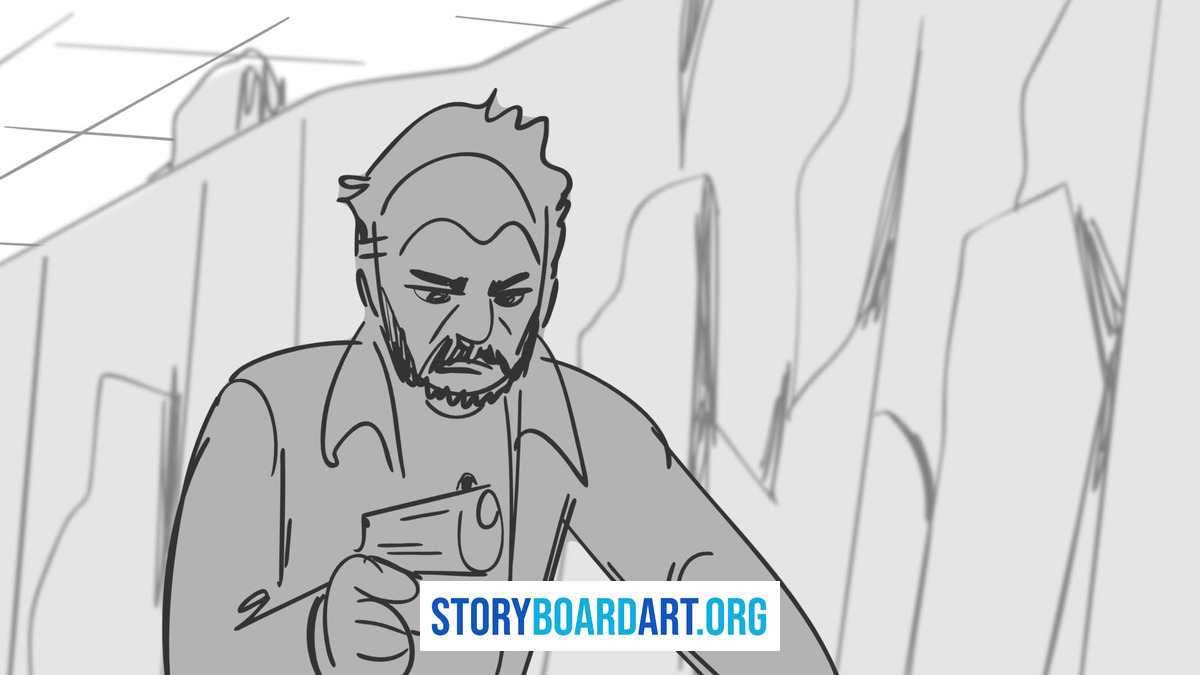
Within that range, three rough zones behave differently. From 10 to 15 degrees, something feels off, but the audience may not consciously know what. From 20 to 30 degrees, the tilt is clear and the impact is immediate. From 30 to 45 degrees and beyond, the effect turns stylized, aggressive, even surreal, and it should be reserved for moments that can carry that intensity.
The key pitfall sits at the low end: anything under 10 degrees often reads as sloppy drawing rather than an intentional tilt, because the angle has to declare itself as a choice. A horizon that's two or three degrees off just looks like a ruler slipped.
Lock the angle in once you've chosen it, and keep it consistent through the beat. When stability returns to the scene, level the horizon out cleanly so the audience feels the release.
Shot selection comes first, before tilt is even a question. The full system is here: Camera Angles Guide.
How to compose a Dutch angle so it stays readable in boards
A tilted shot only works if the audience still understands what they're looking at. Three checks help keep that true.
First, mark the horizon clearly in your drawing, even when it's a background detail, because that line is what tells the viewer the frame is deliberately off rather than just badly drawn. Second, protect your silhouettes. Tilting smashes shapes together in new ways, and edges that read cleanly in a level frame can suddenly touch or overlap once the whole image rotates, so check for new tangents where that happens. Third, point the diagonal on purpose. That slanted line running through your frame should lead the eye toward your story point, not off into empty space in the corner.
Dutch angles don't fix bad staging. If the geography of a scene is already confusing on a level frame, tilting it only makes the confusion worse, because now the audience is fighting both the spatial layout and the rotated horizon at once.
Need fundamentals first? Composition Rules.
Dutch angle in movies: patterns worth stealing and one to avoid
Don't memorize films, steal the patterns underneath them. Three stand out as genuinely useful references.
Do the Right Thing increases its tilt gradually as conflict escalates through the film, so the technique tracks the story's rising temperature rather than announcing itself all at once. The 1960s Batman series used tilt as shorthand for villains specifically, training audiences to read a canted frame as "something bad is happening here" almost instantly. Fear and Loathing in Las Vegas leans on tilts to represent unstable mental states, letting the camera itself seem to lose its footing along with the character.
The cautionary tale is Battlefield Earth, which tilted nearly every shot in the film regardless of what was happening in the scene. When everything is tilted, nothing is, and the technique stops carrying any meaning at all.
Dutch angle example: one beat, three versions, and what changes
Take the same moment: a character discovers a lie. Here's how three different camera choices change how an audience experiences it.
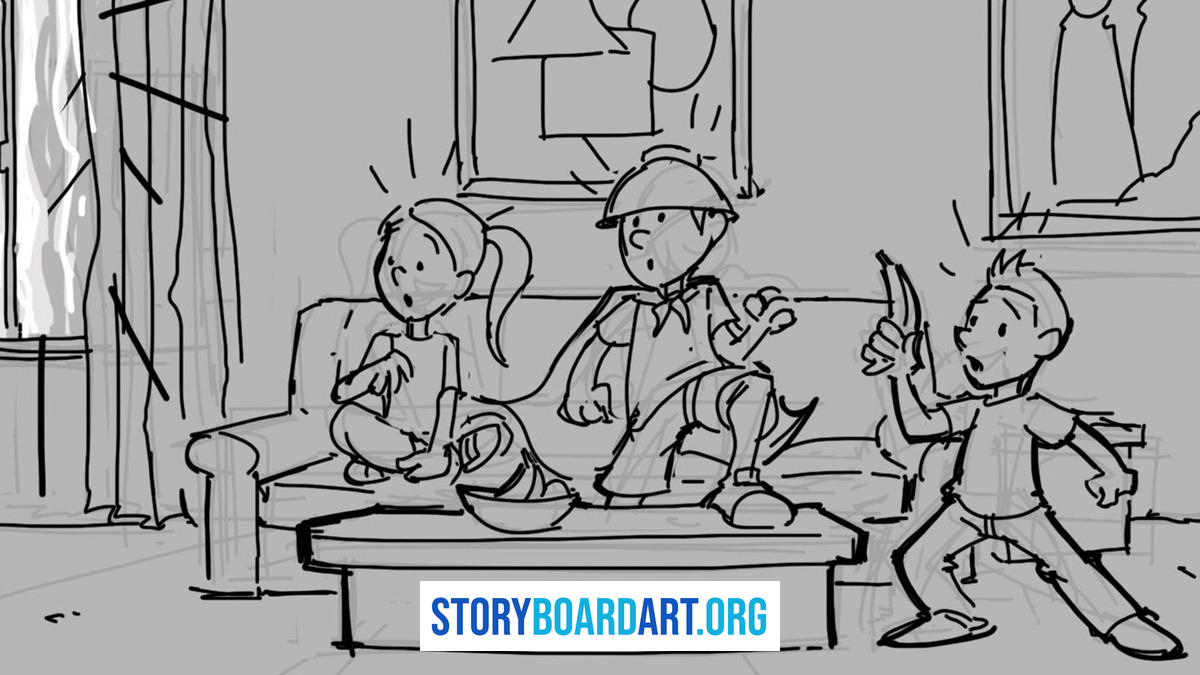
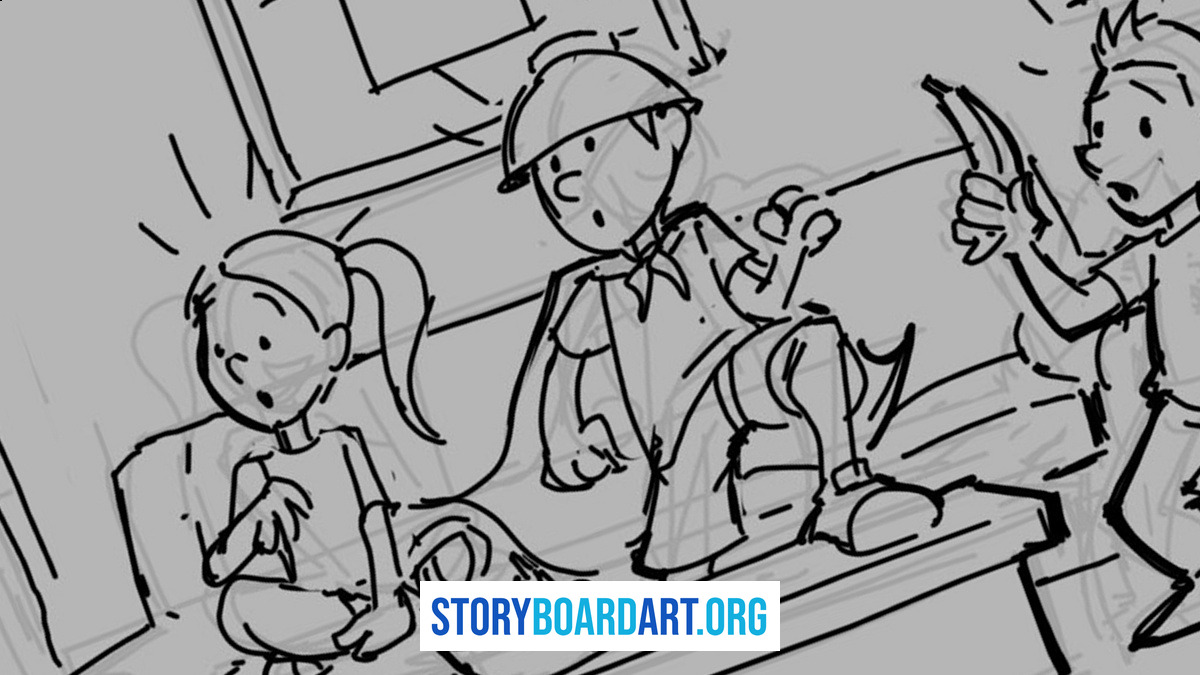
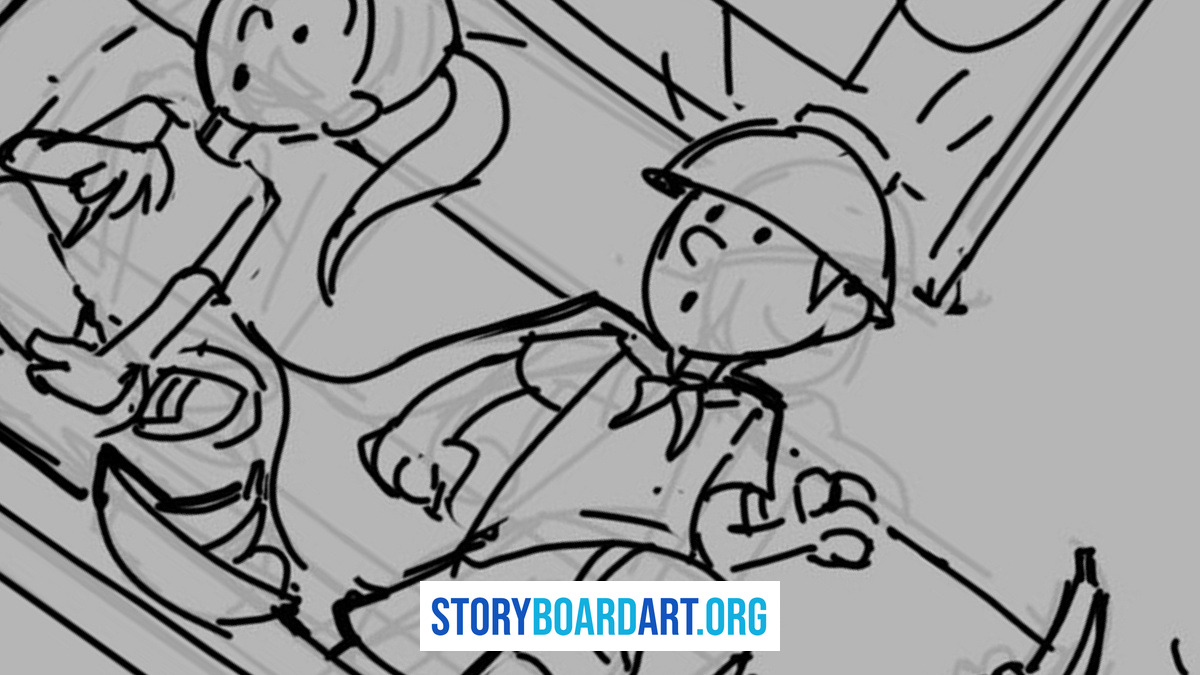
In the first version, a medium shot with a level horizon lets the audience understand what's happening while staying emotionally detached, observing rather than feeling. In the second version, the same framing with a 20 degree tilt makes the room itself feel unsafe, even though nothing in the staging has changed. In the third version, a tight close-up with a 35 degree tilt and a slow push-in puts the audience inside the panic rather than watching it from outside.
The staging is identical in all three. The feelings come entirely from the camera choices layered on top.
One thing to remember through all of this: screen direction still matters even when the frame is tilted. A Dutch angle changes the horizon, not the rules governing where characters and action sit relative to each other from shot to shot. The 180 degree rule guide covers how to keep that consistent.
The real risks: when Dutch angles hurt your scene
There are a few specific ways this technique goes wrong. A wobbly, inconsistent angle looks like bad drawing rather than a deliberate choice. A tilt used as a substitute for real staging doesn't fix whatever core problem exists in the composition underneath it. Overused across too many panels, the technique becomes visual noise, the Battlefield Earth problem. And in a scene that's already hard to follow, adding a tilt on top only makes the action harder to read.
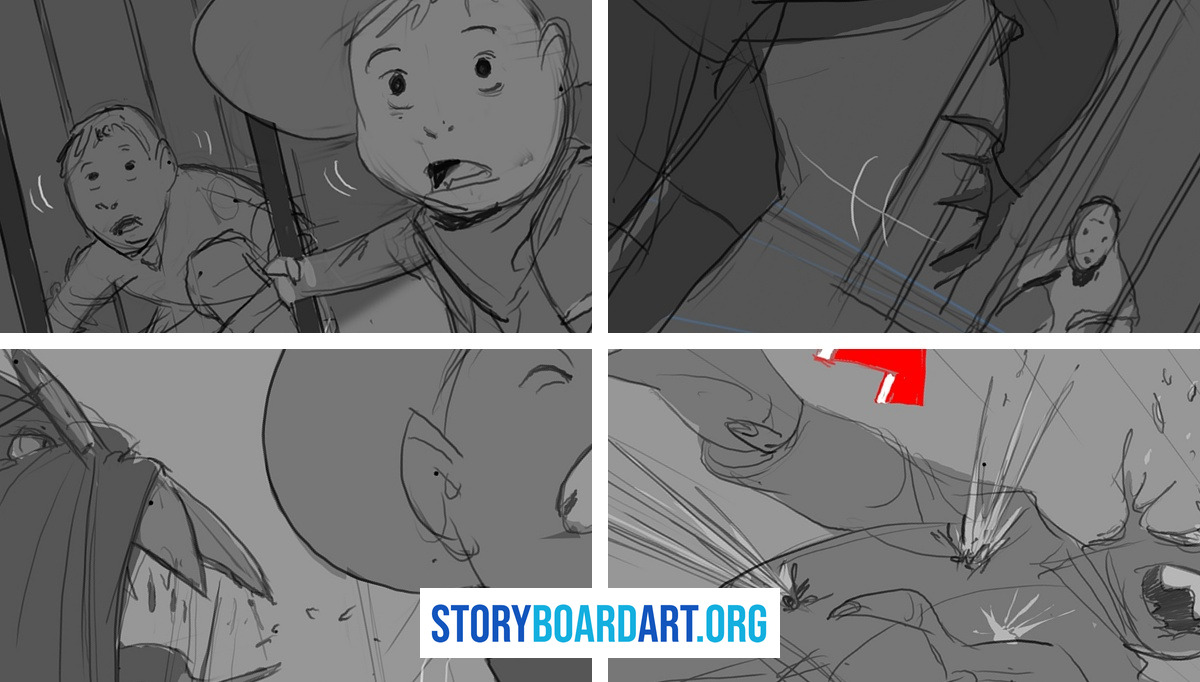
I hold myself to the same discipline with screen direction. Most of the time I do not break the 180 rule unless I really need to. I will deliberately break screen direction on intense action scenes, or to create something very jarring for the audience: a reversal, or a change of story direction. Most of the time though, I keep things straight. A tilted horizon deserves the same discipline: keep the frame level by default, and tilt it when the story beat has earned it.
The simple rule to check yourself against: if you can't explain the tilt in one sentence, the scene is probably better off without it.
Frequently asked questions
Is a Dutch angle the same as a Dutch tilt? Same thing. "Canted" and "oblique" also describe the same technique.
How can I tell a tilted set from a tilted camera? Check the horizon. A flat horizon with leaning objects in the set is production design. A slanted horizon means the camera itself has rolled, which is the Dutch angle.
How small can the tilt be before it looks like a mistake? Below 10 degrees risks looking accidental rather than intentional. Whatever angle you choose, stay consistent with it through the beat.
Should I use tilted shots in my storyboard portfolio? One well-placed tilt, clearly motivated by the story, shows skill and control. Scattering tilts across a portfolio without reason reads as uncertain technique rather than style.
Do filmmakers still use the Dutch angle today? Yes, but sparingly. Modern audiences are sophisticated enough that they need a story reason for the tilt, not just the visual novelty of it.
