The first time I pitched in front of a team of artists, I was so nervous my hands were shaking at the whiteboard. I was young and new to the team. Nobody ate me, and nobody cut my head off when I was done. The more I pitched, the easier it got, and now I actually enjoy it.
That’s the part of being a story artist most beginners never hear about: you don’t just draw the story, you stand up and sell it. The job title doesn't make it any clearer. Job posts say “story artist.” Schools say “storyboard artist.” Studios use both, sometimes for very different jobs.
By the end, you'll know what the job actually entails, how animation studios run their story teams, and what your portfolio must prove to get hired.
Short answer: you pitch scenes out loud, take brutal notes, and rework boards endlessly with directors, well beyond just drawing pretty panels. It's a different beast in features vs TV vs live action, and the title on the job post won't tell you which one you're walking into.
Here's the breakdown.
The actual job description
A story artist converts written material, scripts, outlines, vague notes, into visual storyboards that show a scene shot by shot. That's only step one, though. Next comes pitching those boards out loud and reworking them based on feedback.
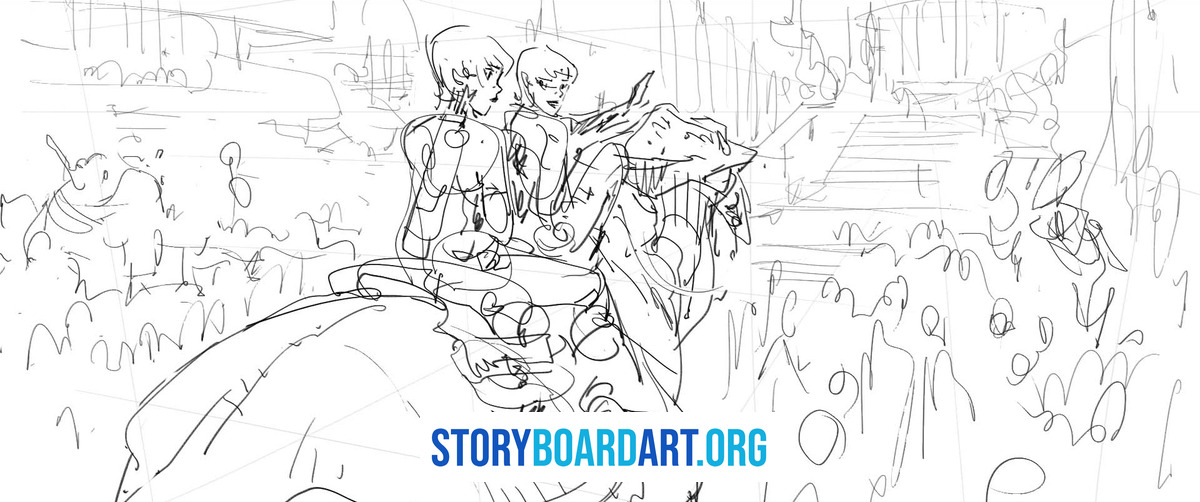
This happens primarily in animation, in both features and TV, though live-action uses boarding too. The core skill is solving story problems, not drawing panels in order. Is the scene confusing? Slow? Emotionally flat? You diagnose why and fix it through the boards, not through a prettier drawing.
Then you repeat. And repeat. You'll present to the story supervisor, director, and editorial team. They'll tear it apart. You'll revise. This cycle continues until the scene works. Forget about precious artwork. A sequence that keeps missing the mark gets reboarded as many times as it takes, and nobody on the team is counting your redraws against you. They're counting whether the scene lands.
Take a worked example. Say you're handed three pages of script: a character has to lie to her brother and get caught. Your first pass might run twelve panels, mostly wide shots, because you're still figuring out where everyone stands and when the lie actually breaks. That pass is rough on purpose. It exists so the room can tell you if the staging reads before you spend another day refining acting choices that might get thrown out anyway.
For what makes boards actually functional, not just pretty, see what is storyboard art?
How animation studios actually run their story departments
Story is where films get broken before they get made. Before animators touch a scene, before most of the crew is hired, story artists work out the kinks on paper. Fixing problems here takes days. Fixing them after animation takes months, which is the entire reason this stage exists and why studios protect the time for it.

Here's the workflow, stage by stage.
Kickoff. You get a script or bullet points outlining the scene's purpose. No drawing yet. First you need absolute clarity on what the scene must accomplish, because boarding the wrong goal wastes everyone's week, not just yours.
Thumbnails. Fast, ugly sketches. You're solving staging and cutting patterns, not making art. Save the rendering for later. Right now you're just figuring out where the camera and characters go.
Rough boards. Now you refine acting choices and continuity. The drawings stay loose. At this stage, clarity trumps polish every time, because a beautiful drawing of the wrong beat still has to be thrown out.
The pitch. You present the sequence to the team, explaining each shot's purpose. If they can't follow the story from your pitch, the boards aren't ready, no matter how nice they look.
Notes and revisions. Director, supervisor, and editorial give feedback. You rework the boards. This repeats until the scene holds up.
Animatic. Approved boards get cut together with timing. New to this? See what is an animatic?
Here's how my days in the story department actually break down. After kickoff, you get a few days to research and prepare. Then you drop your first pass as soon as you can, something presentable enough to pitch. Once approved, it goes to editorial for animatics.
Most days, you're at your desk grinding through sequences between meetings. The key is maximizing actual work time. And it helps to clarify any doubts before committing days to work that might get scrapped.
Your first version should be wrong. The skill is being wrong fast enough that notes can save you, not wrong in a way that costs the schedule a week.
What you actually control in a scene
When you get assigned a sequence, you're not just illustrating it. You're building the first watchable version of that scene. No other elements exist yet. Your boards have to function as the actors' performances, the cinematography, and the editing, all at once, before a single frame is animated.
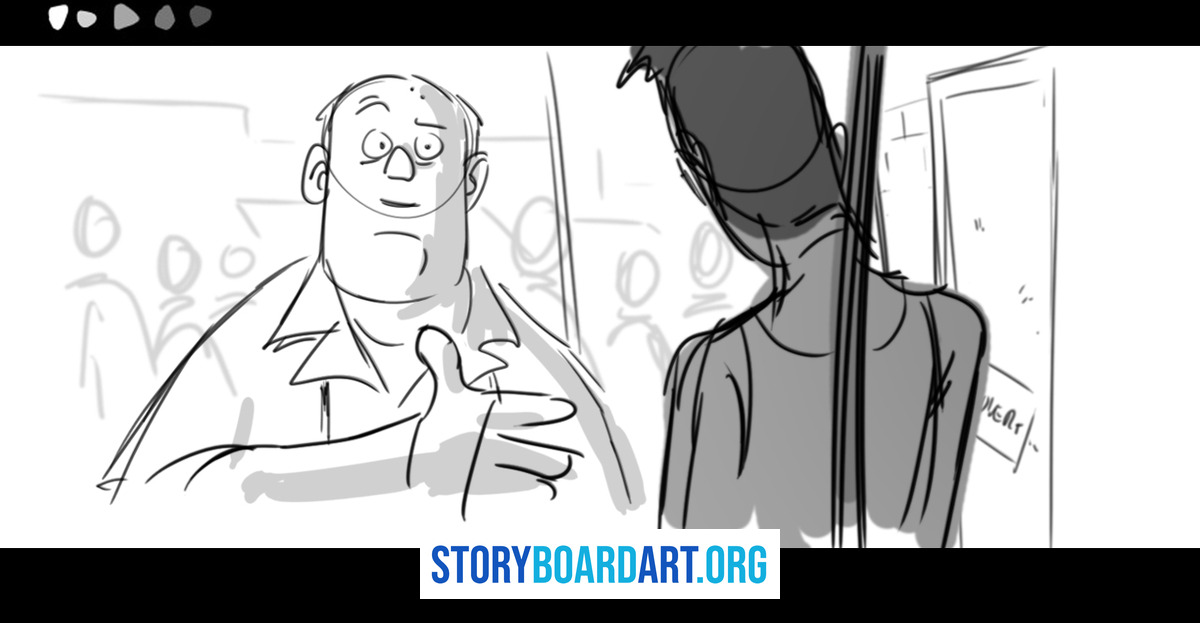
That means handling three things directly. Performance is how characters move and react to sell their intentions without dialogue. Camera work covers shot sizes, angles, and screen direction, keeping it all clear so audiences never get lost. Editing means ruthlessly cutting anything that doesn't serve the beat. A moment gets exactly the panels it needs, no more.
You're directing a movie where nothing exists yet. That's why the job pulls in so many directions at once, and why a story artist's instincts end up shaping scenes as much as the script does.
Take a simple lie scene. Stay in medium shots to show both characters' reactions as the conversation builds. Save the close-up for when the lie actually cracks. If you blow your strongest shot too early, by pushing in tight in panel three instead of panel fourteen, you've got nowhere left to go when the moment that matters finally arrives. That's a pacing mistake no amount of pretty drawing fixes.
Want more scene construction tips? See Story Structure for Storyboard Artists
Pitching, the skill art school ignores
No one teaches you how to pitch. You'll stand in a room and walk through your sequence panel by panel, explaining each choice out loud, and it has nothing to do with showing off your artwork. It's testing whether the story reads as intended when someone else is hearing it for the first time.
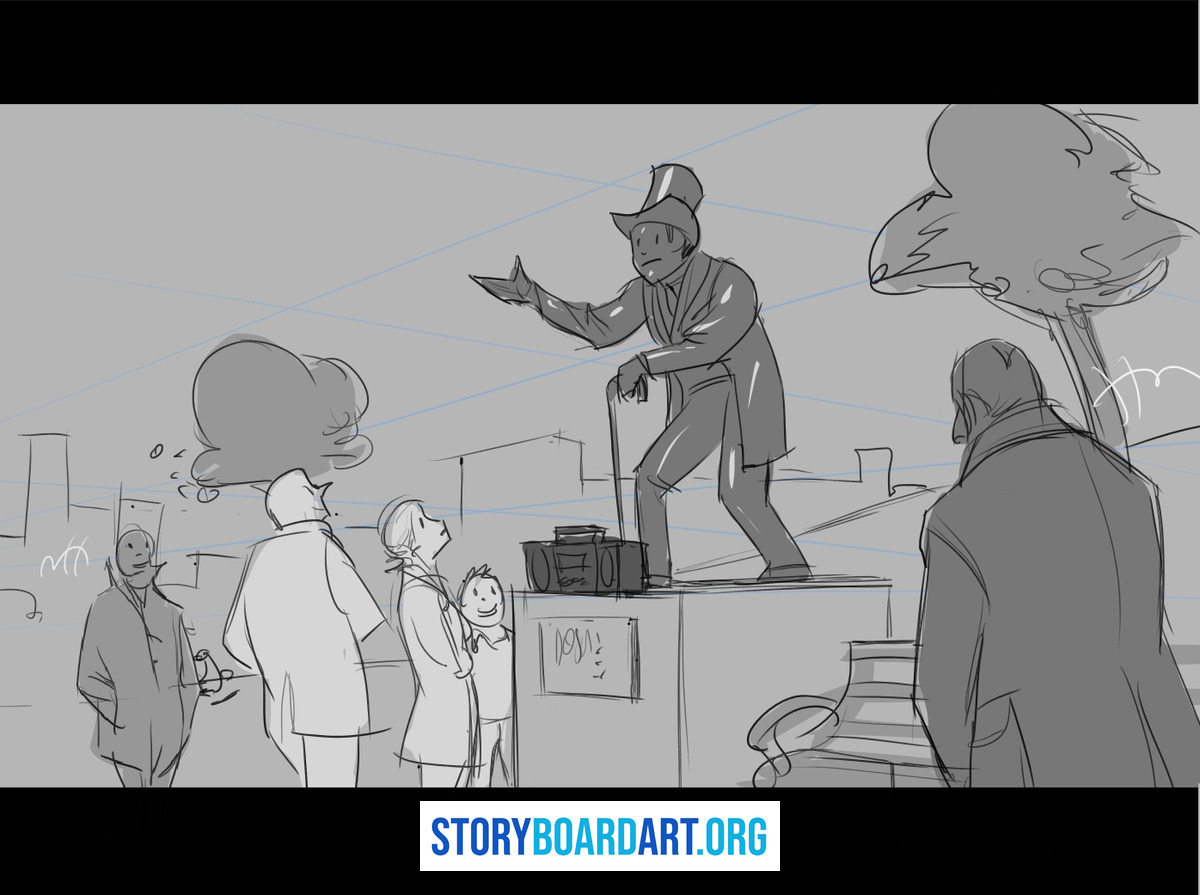
Then come the notes. Expect to hear confusion about where characters are standing, emotional beats that don't land, motivations that aren't clear, jokes that fall flat, or pacing that drags in the middle. None of that means you failed. It means the room is doing its job.
Here's the rule: don't defend your boards, diagnose them. Ask "where did you get lost?" instead of "why don't you like it?" That question turns feedback into actionable fixes instead of a debate about taste.
Here's a story from my own experience. I once poured days into a character moment that felt completely wrong in context once I pitched it. The team gave direct, honest feedback, and the moment got cut. It hurt at the time, but it taught me to vet ideas early through better prep and communication.
If you can't pitch your sequence clearly, no director will trust you with production work, no matter how clean your drawings are.
Title chaos: story artist vs storyboard artist
Here's the ugly truth. Studios don't use these terms consistently. One company's "story artist" is another's "storyboard artist" doing entirely different work. The fix is to ignore the title and read the actual job description instead.
The role differs a lot by medium. In animation features, expect constant reworking and problem-solving. You're usually called a "story artist" and you'll reboard scenes until they hold. In TV animation, the pace is faster and the schedules tighter. The work is more about matching an established style than reinventing a scene from scratch. In live action and commercials, you're often called a "storyboard artist." You're executing a director's shot list, not rewriting scenes.
This matters when job hunting. If a post emphasizes likenesses, meaning drawings that match real actors, and camera accuracy, it's live-action style work, even if the title on the post says "story artist." Build your samples accordingly, because a reel built for feature animation story work won't necessarily land a live-action boarding job and vice versa.
Technical reality: making yourself hirable
Studios need your files to work inside their pipeline. Fancy drawings that break their workflow are useless to a production that's moving fast.
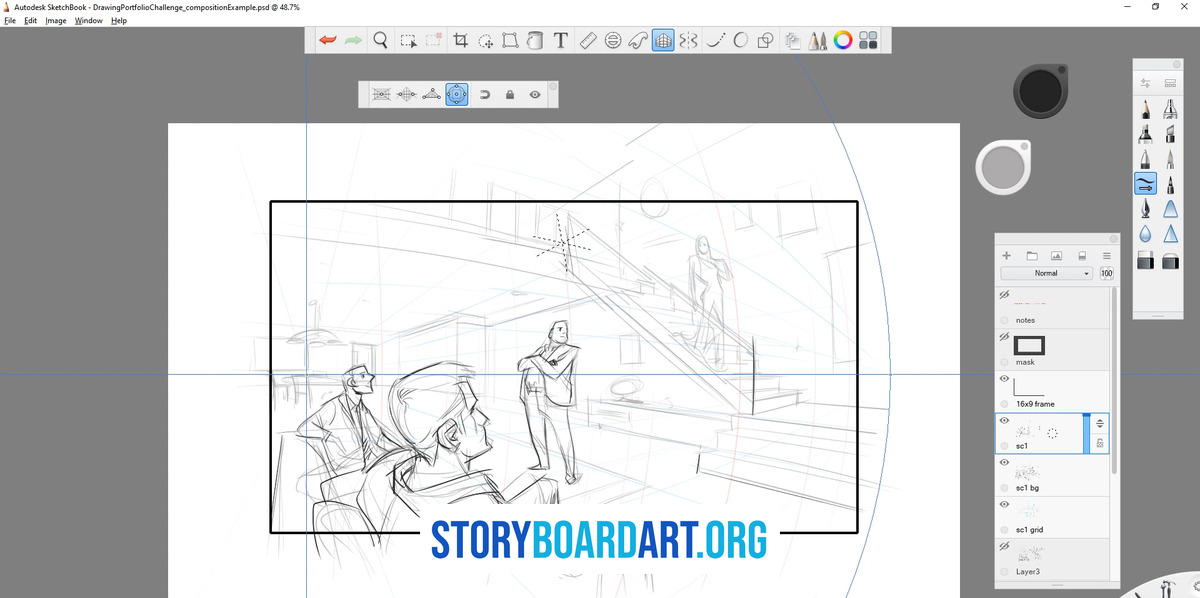
Storyboard Pro is the industry standard. Learn its timeline, its camera moves, and its export formats, because that's what most studios expect you to hand off. You'll also want drawing software like Photoshop or an equivalent for cleanups and quick fixes. And file hygiene matters more than it sounds: clear naming, version control, and organization that doesn't confuse an editor trying to find your latest pass at 6pm on a deadline day.
Some studios, including Walt Disney Animation Studios, use proprietary tools built in-house. Don't sweat learning those before you're hired. Know the standards and you'll adapt once you're in the building.
No tablet? No problem. Even paper artists can prove their chops by cutting simple animatics. This shows you understand timing, not just drawing.
Want pay numbers? Not here. Check storyboard artist rates and making a living
How to become a story artist
Here's the cold hard fact: studios hire your work, not your dreams. No one cares about your degree or your passion going in. They look at your sequences and judge whether you can do the job, full stop.
Watch: Want to Be a Storyboard Artist? Here's How to Start
Start by building sequences, not single images. Aim for three to five complete scenes with a clear beginning, a turn, and an end. One pretty drawing proves nothing about whether you can carry a story across twenty panels.
Thumbnail first. Solve problems with fast, rough sketches before you commit to a clean pass. Fixing a staging problem at the thumbnail stage takes an afternoon. Fixing it after you've rendered final boards costs you the week.
Get real critique. Find someone who can explain why a sequence fails, not just someone who says "nice work." Praise feels good and teaches you nothing. A note like "I lost track of who was where in panel six" tells you exactly what to fix.
Study film language: shot progression, continuity, staging, and emotional turns. A good place to start is Drawing Fundamentals.
Here's what that looks like as a worked example. Pick a short scene from a script you like, maybe a page and a half. Thumbnail it rough in an afternoon, a dozen panels, stick figures are fine. Show it to someone and ask only one question: where did you get lost? Fix that, redraw the sequence clean, and you've got your first real portfolio piece built the same way a studio sequence gets built.
No film degree required. No unattainable internship required. Just make sequences, get notes, revise, and repeat until you're hireable.
Need a portfolio checklist? Start with Killer Storyboard Portfolio
FAQs
What does a story artist do day to day? Mostly drawing at your desk, working passes until sequences hold together. Broken up by pitches and note sessions.
Do you need a degree to become a story artist? No. Studios care about your portfolio and your ability to deliver, not your education.
How good does your drawing need to be? Clarity beats polish. But fundamentals must support acting, camera work, and perspective competently.
Do you need to know Storyboard Pro? For production work, often yes. For portfolios, any tool works if you prove timing understanding, for instance via animatics.
Are story artists unionized? Some US studio work is unionized, including through The Animation Guild. See Artist Unions
Will AI replace story artists? Not for the core work. Emotional beats, pacing, scene structure, and editing choices require human judgment, the same judgment that studios like Pixar have built entire story departments around for decades. The play is to master fundamentals so tools enhance rather than replace you.
