Every scene in a film needs a plan for who goes where. Before the camera rolls, someone decides where each actor stands, when they move and where the camera watches from. That plan is blocking in film, and it shapes what the audience sees and feels in every shot.
I have worked in film, TV and games for more than 25 years. In that time I have storyboarded six feature films across live action and animation, and I have worked as a storyboard artist at Pixar. I also directed episodes of Star Wars Rebels and Star Wars Resistance at Lucasfilm.
Much of that planning can start in the storyboards, the drawings that plan a film shot by shot. In this guide I explain what blocking means, how it differs from staging and how story artists, the artists who draw the storyboards, block a scene in boards. Then I follow the plan from the boards to the set and show how blocking shapes emotion and movement.
What is blocking in film?
Blocking in film is the plan for how the actors and the camera move through a scene. A scene is one stretch of the story that happens in one place at one time, such as a conversation in a kitchen or a chase down a street.
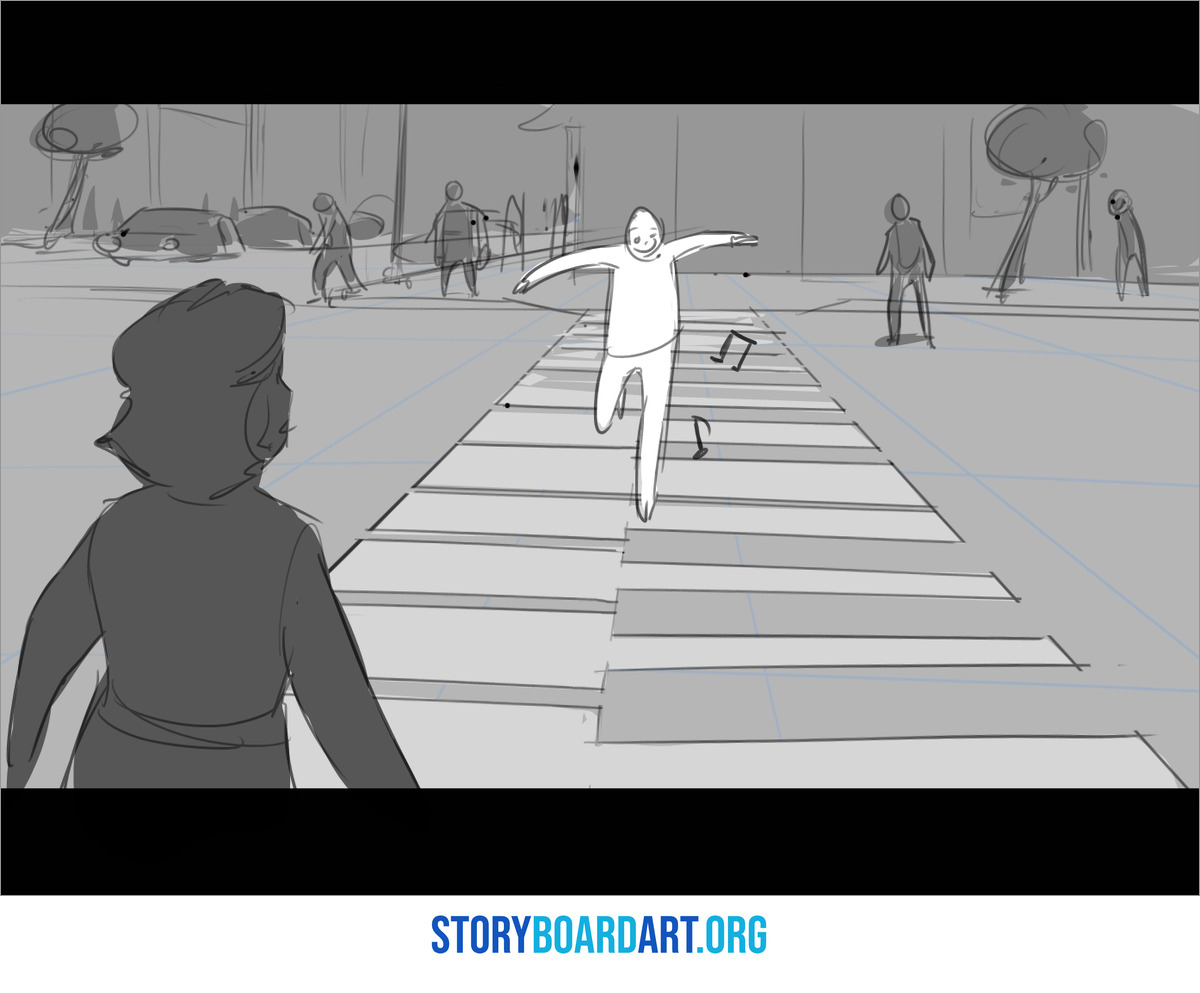
Film blocking settles three things for every scene:
- Where each actor stands: the spot where every character starts the scene and the spot where each one ends up.
- How and when they move: every walk, turn and stop, timed to the dialogue and the action.
- Where the camera sits and moves: the position the camera films from in each shot and any move it makes during that shot.
A shot is one unbroken piece of film between two cuts, so the camera part of the plan is set shot by shot. All of it is worked out before the shoot, so the crew, the team that films the scene, arrives with a plan instead of a guess.
The term comes from the theater, where a director plans where the actors stand and move on the stage before the play opens. Film keeps the idea and adds the camera.
On a stage, the audience watches the whole space from their seats. On a film set, the camera is the audience, so every position and every move has to work for the camera as well as for the actors. When the blocking works, the audience always knows who is where and what matters in each moment.
Blocking is one part of the visual language of film, and Cinematography for Storyboard Artists: Visual Film Language shows how it fits with the rest.
Blocking vs staging
The two words sit close together, and many people use them as if they mean the same thing. Blocking is how the actors and the camera move through a scene. Staging is the wider arrangement of the set, the props and the background that supports the blocking and guides the eye.
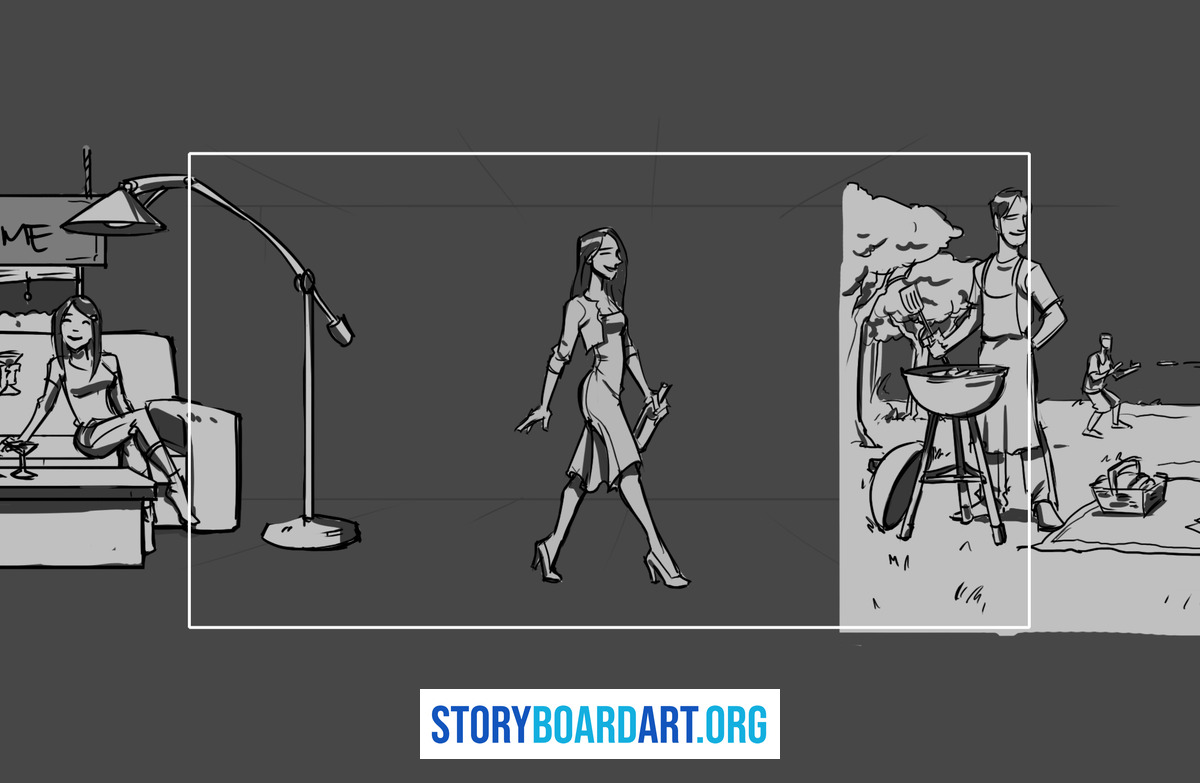
The set is the place where a scene is filmed, whether it is built or found. Props are the objects in it that the actors handle, such as a phone or a letter. Blocking and staging overlap all the time, which is why the two words are so often used together.
Picture a character who crosses a room to pick up a letter. The walk and the camera that follows it are blocking. The lamp that lights the letter and the dark doorway behind it are staging, because they lead the eye to the right place at the right moment.
In animation, staging has one more meaning. It is one of the classic principles of animation: present each idea so clearly that the audience cannot miss it, whether that idea is an action, a mood or a joke.
For a story artist, that principle is a test every panel has to pass. A panel is a single drawing in a storyboard, and if it needs explaining, the staging is not working yet.
Staging leans on composition, the arrangement of shapes inside the frame, which is the rectangle the audience sees. Composition Rules for Storyboards: A Visual Guide covers the rules that guide the eye.
How story artists block a scene in boards
Blocking a scene in boards starts with a map rather than a panel. The map is an overhead diagram of the set, also called a floor plan or a blocking diagram, which shows the space from directly above, like the plan of a house.
Everything that moves in the scene goes on the diagram:
- Starting marks: where each character stands when the scene begins.
- Moves: the path each character takes and the spot where each one stops.
- The line of action: an imaginary line through the characters, or along the way they travel, which the 180-degree rule is built on.
- Camera positions: every spot the camera films from, placed on the diagram before any panel is drawn.
The 180-degree rule keeps every camera on one side of the line of action. That way, the characters keep facing the same way and moving in the same direction across the frame from shot to shot, and the audience never loses track of the space.
With the diagram done, the panels come next. Each panel is drawn from one of the camera positions on the diagram, so the space stays consistent across the sequence, the run of shots that tells one part of the story. Arrows then show every move, from the path a character takes within the shot to the way the camera turns or travels.
Working this way catches problems while they are still easy to fix. A camera on the wrong side of the line, or a move that hides a character behind another, shows up on the diagram long before anyone is on set.
The line of action is where many blocking problems begin, and 180 Degree Rule in Film: Storyboard Guide to Screen Direction covers it in full.
From boards to set
Blocked boards give the director, the cinematographer and the actors a shared plan. The cinematographer leads the camera and lighting team. With the boards in hand, all of them can picture the same scene before the first take, which is one attempt at filming a shot.
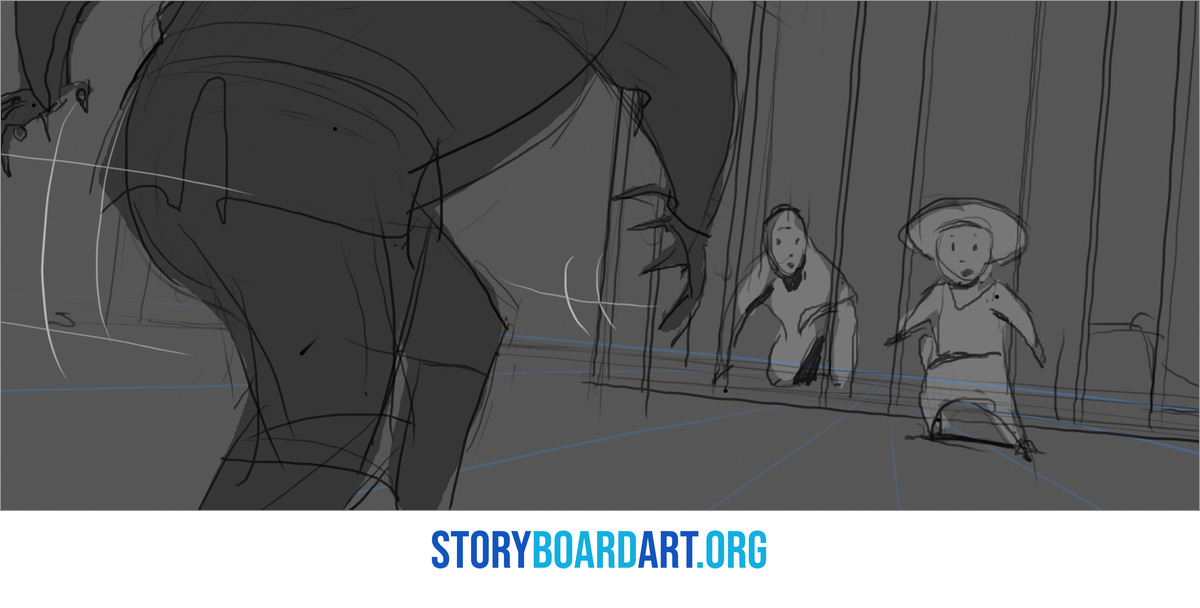
On set, the work usually runs in this order:
- Block: the director walks the actors through their positions and moves while the camera team watches where the camera needs to be.
- Light: the crew lights the set for those positions, so each spot where an actor stops looks right on camera.
- Rehearse: the actors and the camera run the scene together until every move and every line lands.
- Shoot: the camera rolls, and the scene is filmed take by take.
The boards do not replace any of those steps. When they already answer where everyone goes, though, the day on set starts from a plan rather than a blank page.
The director leads the blocking on set. In the US, directors and members of the directorial team are represented by the Directors Guild of America, their union.
Some productions add one more step between the boards and the set, called previs. It is a rough 3D version of the scene that tests the blocking and the camera before the shoot, and Previs: Previsualization in Film and Animation explains how it works.
A blocked board can also decide how a moment feels. One of the shots I boarded for a feature film showed me how much a single choice can carry.
When I worked on the independent feature Little Boy back in 2013, the film was about a young boy who was shorter than most of his classmates. It was a period piece, a drama, where the child was longing for a relationship with his dad. There were many scenes where we built the emotional connection with his father, who was away fighting in the war and then returned home.
Not everything I boarded ended up in the film as I had staged it, but in the boards there were a number of shot choices that affected how we shot the scene. I remember one in particular where the mother breaks down crying when she is given the news that her husband could be dead, or had been taken prisoner of war. It was a wide shot where she openly breaks down on her knees and starts crying.
I was invited to the set and I saw that scene play out. It was emotionally impactful for everyone on the set, watching Emily Watson do a piece of brilliant acting. The camera was wide, but it captured the emotion quite well.
That is one of the wonderful pleasures of seeing the idea on paper, pitching a particular shot choice, and then witnessing how it actually came to fruition. In the end everything we do in dramatic visual storytelling is hinged on human emotion. We have to capture it in the most effective way possible so we build a rich visual experience for the audience.
That day on set showed me that a wide shot can carry the biggest emotional moment in a film. Many people assume that emotion always means moving the camera close, but the staging choice should serve the emotion rather than a rule.
Blocking for emotion
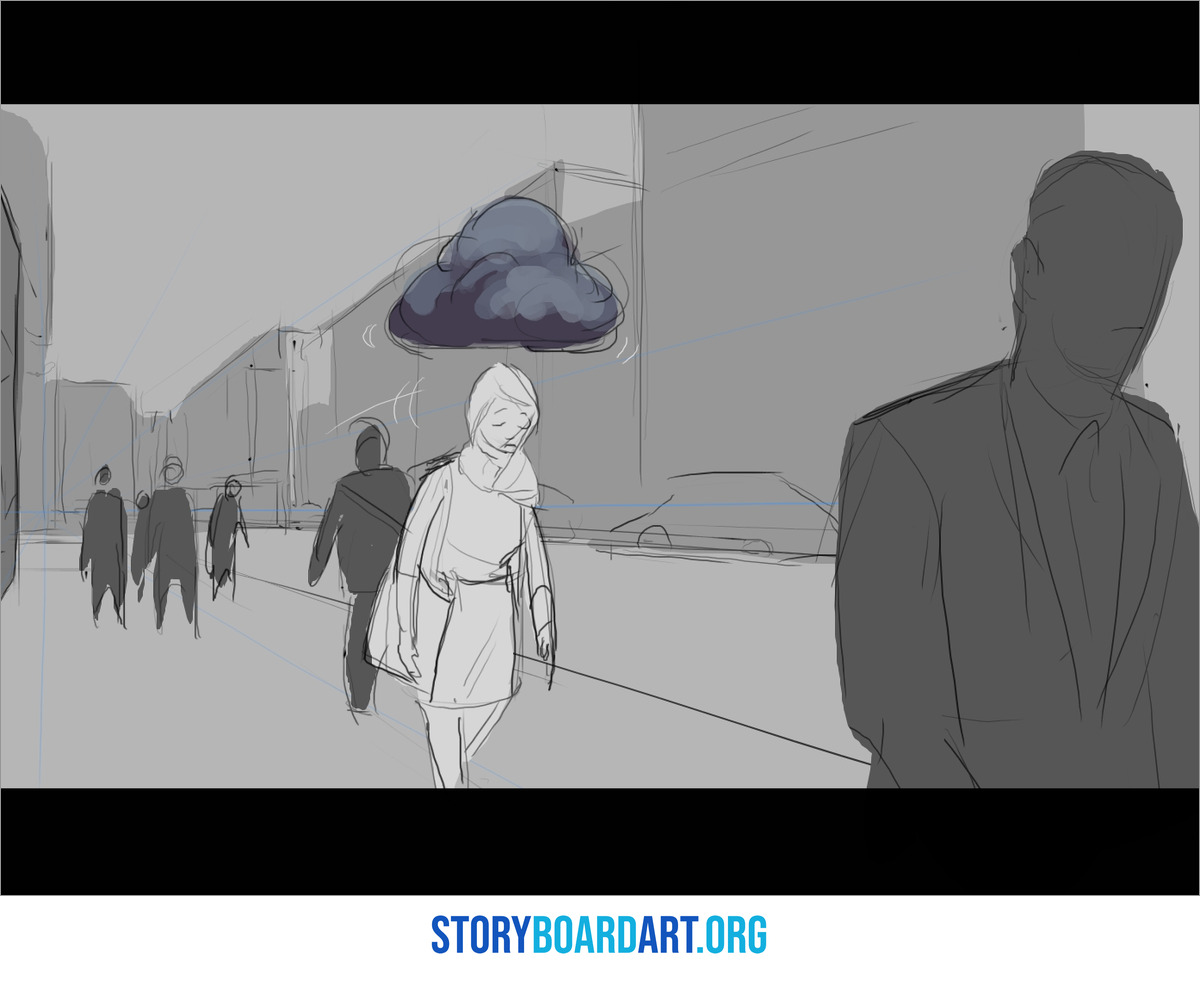
Where the camera sits is an emotional choice as much as a practical one. The distance between the camera and the characters, and whose point of view the camera shares, decide what the audience feels.
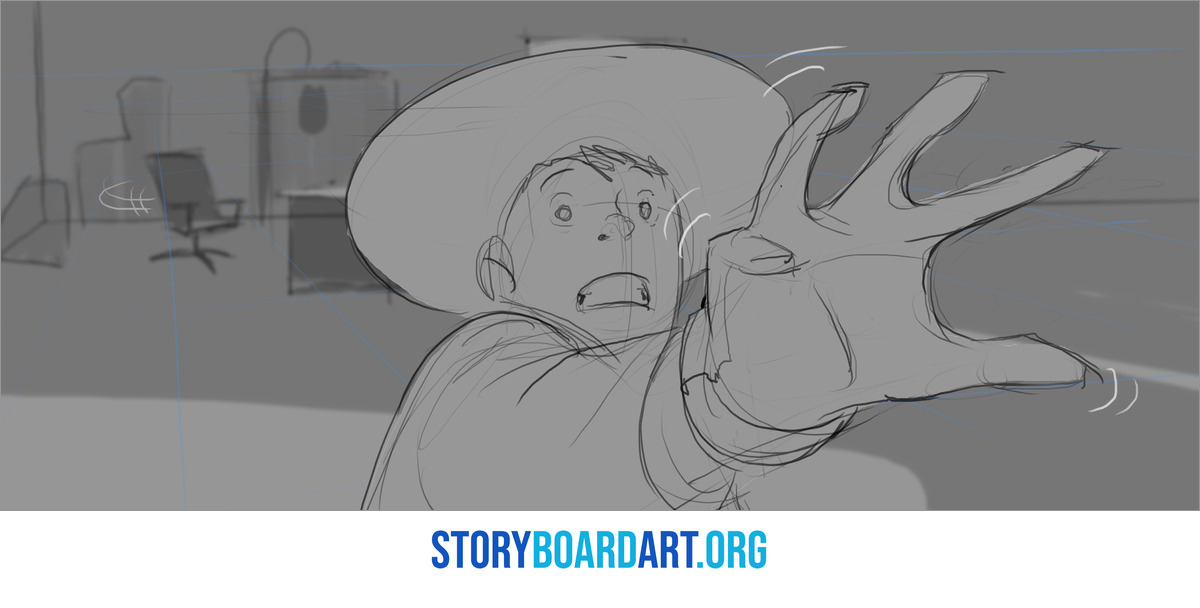
Distance runs from the wide shot, which shows the whole space with the characters small inside it, to the close-up, where a face fills the frame. In between sits the medium shot, which frames a character from about the waist up.
Point of view means whose eyes the audience borrows in a moment. When the camera stays near one character and sees what they see, the audience feels the scene from their side.
Blocking shows emotion through the way characters move, too. A character who is at home in a space moves through it without thinking, crossing the room easily and sitting wherever they like. A character who is out of place hesitates at the door, keeps to the edges and stays close to the way out.
The right camera distance depends on the point of view the scene needs, a lesson I learned on one of my own sequences.
One of the things I got wrong on a sequence was not understanding the point of view the scene required. The point of view of the characters needed the cameras to be close, an intimate moment, and I was staging everything with wide and medium shots.
It felt disconnected to the audience. My director pointed it out, and it was very important for me to adjust and fix it so the scene actually carried the right emotional charge.
That might seem to clash with the wide shot in Little Boy, but both lessons point the same way. Decide whose point of view the scene needs first, then choose the camera distance that puts the audience there.
In a conversation, moving closer often means cutting between the two characters, and Shot Reverse Shot: How to Storyboard Dialogue Scenes shows how to board that pattern.
Blocking movement: walk-and-talks, action scenes and long takes
Some of the hardest blocking comes when the actors and the camera move together without a cut. Every move has to work for the whole shot, so the plan matters even more.
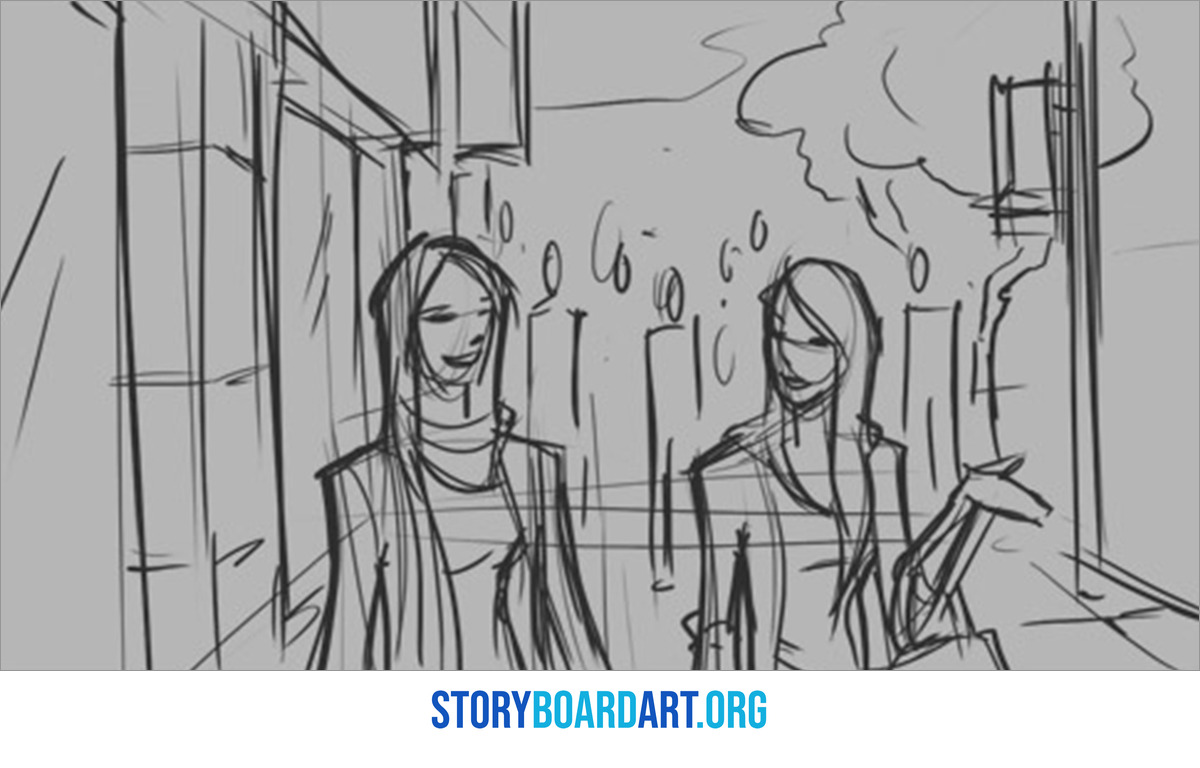
A walk-and-talk is a conversation filmed while the characters walk, with the camera moving ahead of them or beside them. The blocking decides where they turn, where they stop and who leads, and the dialogue has to fit the length of the walk.
The camera often travels on wheels or a track to keep pace, and What Is a Tracking Shot? (And How It Differs From a Dolly) explains how those moves work.
Action scenes, such as fights and chases, need blocking that keeps the geography of the scene clear. Geography here means the layout of the space and who is in it. Clear geography lets the audience follow who is where and which way each character is moving, even when the cutting is fast.
Fights and chases bring pacing into the plan as well, and How to Storyboard Action Scenes: Fights, Chases and Pacing breaks them down.
A long take is a single shot that runs for a long time without a cut. The actors and the camera move together through the whole scene, so every step, turn and camera move has to be planned and rehearsed.
The film 1917 was built to look like it was filmed in very long unbroken takes, and the film Extraction has a long action sequence made to look like a single take. With no cut to hide behind, the blocking carries the whole scene, and the audience stays inside the action from start to finish.
In a long take, the choices an editor, the person who cuts the film together, would make between shots move into the blocking itself. Where a cut would show a new angle, the actors and the camera have to move into that angle instead.
Whether the scene is a quiet conversation or a long take, the questions stay the same: where everyone stands, how they move and where the camera watches from. Answer them in the boards, and the set has a plan to start from.
Clear blocking is one of the best things a storyboard portfolio can show, because it proves you can plan a whole scene. If you want help putting that kind of work together, start with Free Training: Build a Killer Storyboard Portfolio, where I walk you through how to build one.
Frequently asked questions about blocking in film
What is the difference between blocking and staging?
Blocking is how the actors and the camera move through a scene, while staging is the wider arrangement of the set, the props and the background around them. The two overlap so much that the words are often used together.
Who does the blocking on a film?
The director leads the blocking on set, working with the actors and the cinematographer. A first version is often worked out earlier in the storyboards, then tested and adjusted on set.
What is a blocking diagram in film?
A blocking diagram is an overhead map of the set, also called a floor plan, that marks where each character starts, where they move and where every camera sits. It also shows the line of action, so every shot can respect the 180-degree rule.
Does every scene in a film need blocking?
Every scene has blocking, even one where the characters sit still, because someone still decides where they sit and where the camera goes. A simple scene just needs a simpler plan.
